AI assistants are changing how organizations define security risk
THE BRIEF
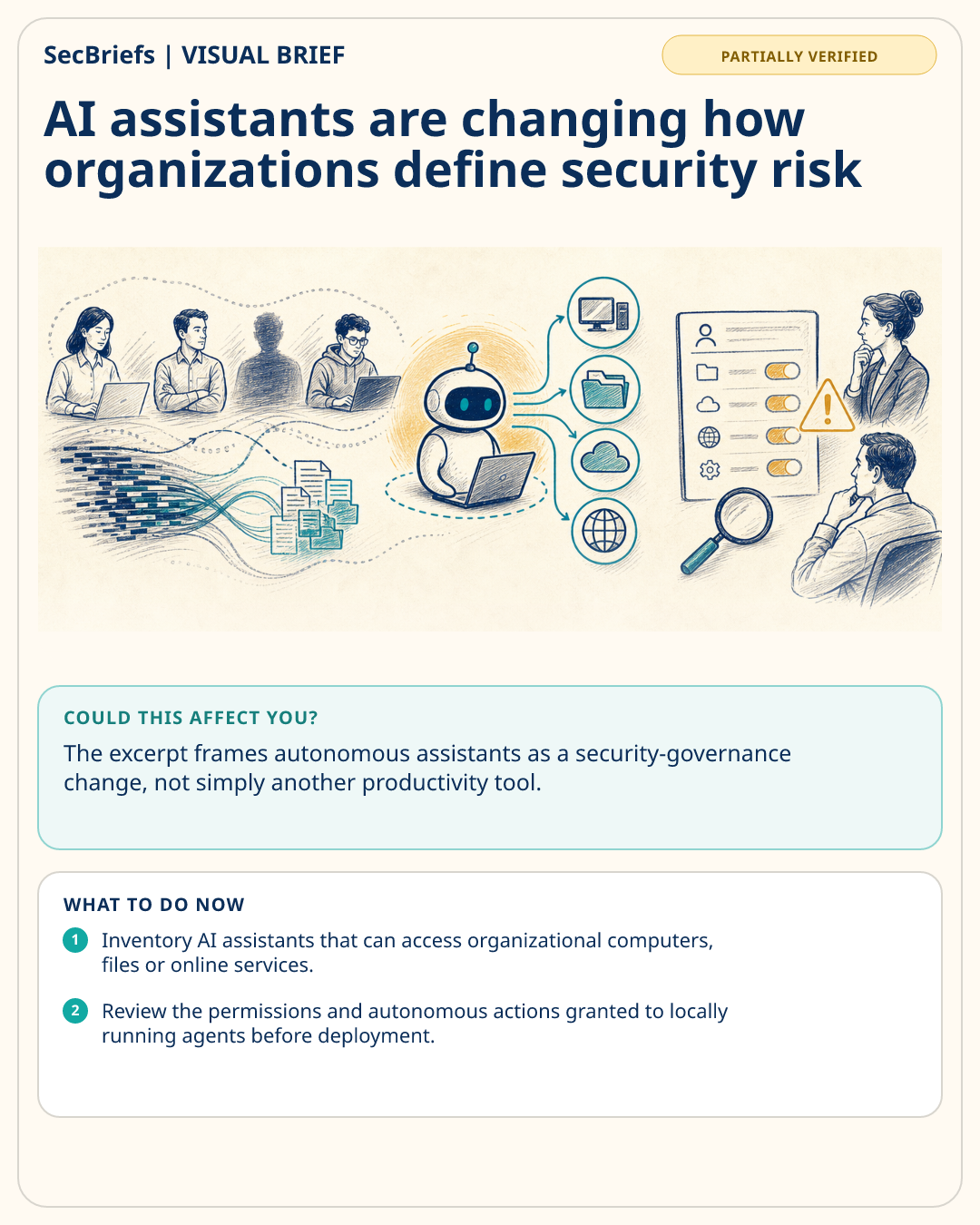
Krebs on Security describes a growing class of AI-based assistants, or “agents,” as autonomous programs that can access a user’s computer, files and online services and automate tasks. The article says these tools are shifting organizational security priorities and blurring distinctions between data and code, trusted co-workers and insider threats, and experienced hackers and novice developers. It identifies OpenClaw, formerly known as ClawdBot and Moltbot, as a prominent new example. According to the supplied excerpt, OpenClaw was released in November 2025 and has seen rapid adoption since then. The open-source agent is designed to run locally on a computer and proactively take actions on a user’s behalf without requiring a prompt for each action. Krebs on Security presents that autonomy and broad access as reasons the technology may create a risky security proposition. The excerpt ends before detailing the article’s further examples or recommendations, so it does not establish any particular compromise, victim count, malicious campaign or measured impact.
WHY IT MATTERS
The excerpt frames autonomous assistants as a security-governance change, not simply another productivity tool. Giving an agent access to computers, files and online services may complicate established assumptions about which actions are performed by people, software or attackers. OpenClaw’s local operation and ability to act proactively are presented as especially important characteristics. However, the supplied material does not document a specific incident or quantify harm. Organizations therefore should treat the issue as an emerging risk area requiring careful review of access, autonomy and accountability, while preserving uncertainty about the actual outcomes described in the full article.
WHO SHOULD CARE
Security leaders, IT administrators, developers and organizations evaluating AI assistants should care. The excerpt specifically highlights tools with access to local computers, files and online services, making their deployment relevant to anyone responsible for permissions, endpoint controls, software governance or oversight of automated actions.
WHAT TO DO NOW
- Inventory AI assistants that can access organizational computers, files or online services.
- Review the permissions and autonomous actions granted to locally running agents before deployment.
- Define accountability and approval requirements for automated actions performed on a user’s behalf.
- Track developments and validate claims against additional details from the full Krebs on Security article.