ATF confirms breach of system holding investigation-target data
THE BRIEF
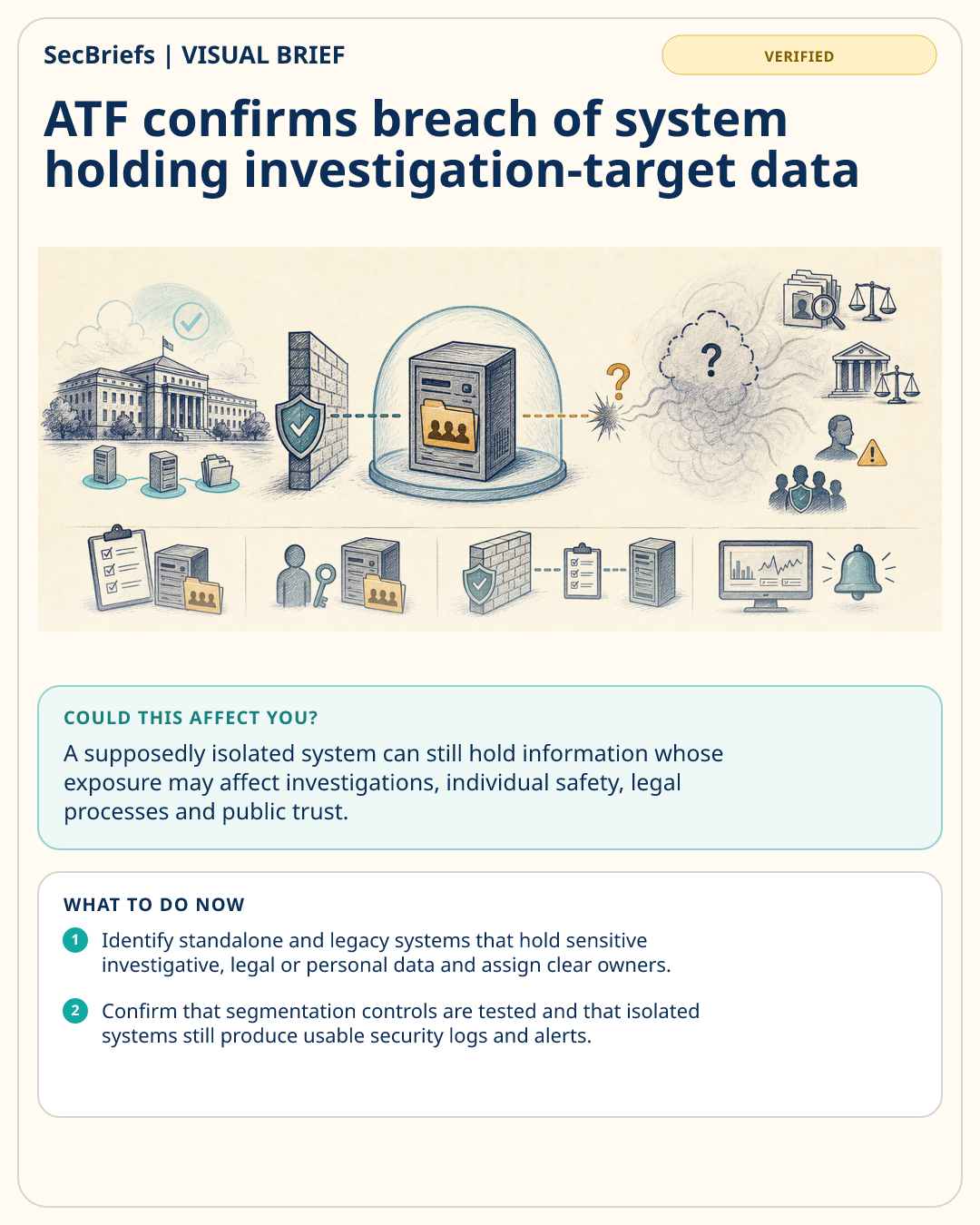
The U.S. Bureau of Alcohol, Tobacco, Firearms and Explosives has confirmed that a cyberattack affected a standalone computer system containing information about targets of ATF investigations. The agency told CyberScoop that the system was not connected to case management, laboratory or eForms systems and was shut down quickly after discovery. Senior officials designated the event a major incident and completed required notifications, while ATF said its mission remained operational. Reuters independently reported the same core facts from an agency spokesperson and noted that the investigation is continuing with the Department of Justice. The Qilin ransomware group claimed responsibility, but ATF has not attributed the incident and the group’s involvement remains unverified. The agency has also not disclosed the intrusion method, timing, categories of information exposed or whether data was exfiltrated. The confirmed concern is therefore unauthorized access to a sensitive investigative system—not a proven compromise of the agency’s wider network or a verified ransomware deployment.
WHY IT MATTERS
A supposedly isolated system can still hold information whose exposure may affect investigations, individual safety, legal processes and public trust. Segmentation appears to have limited the operational blast radius, but it does not answer whether the data on that system was copied or misused. The incident is a useful resilience lesson: organizations must inventory the sensitivity of data held on standalone systems, not only whether those systems connect to core networks. Claims made by an extortion group should remain clearly separated from facts confirmed by the affected agency.
WHO SHOULD CARE
Government agencies, law-enforcement and justice organizations, security and privacy leaders, incident responders, records owners and teams responsible for isolated or legacy systems should review the implications.
WHAT TO DO NOW
- Identify standalone and legacy systems that hold sensitive investigative, legal or personal data and assign clear owners.
- Confirm that segmentation controls are tested and that isolated systems still produce usable security logs and alerts.
- Prepare notification and protection procedures for people whose safety or legal interests could be affected by exposed records.
- Keep attacker attribution and data-theft claims separate from confirmed facts until forensic evidence supports them.