International email-fraud case shows how trusted invoices redirect millions
THE BRIEF
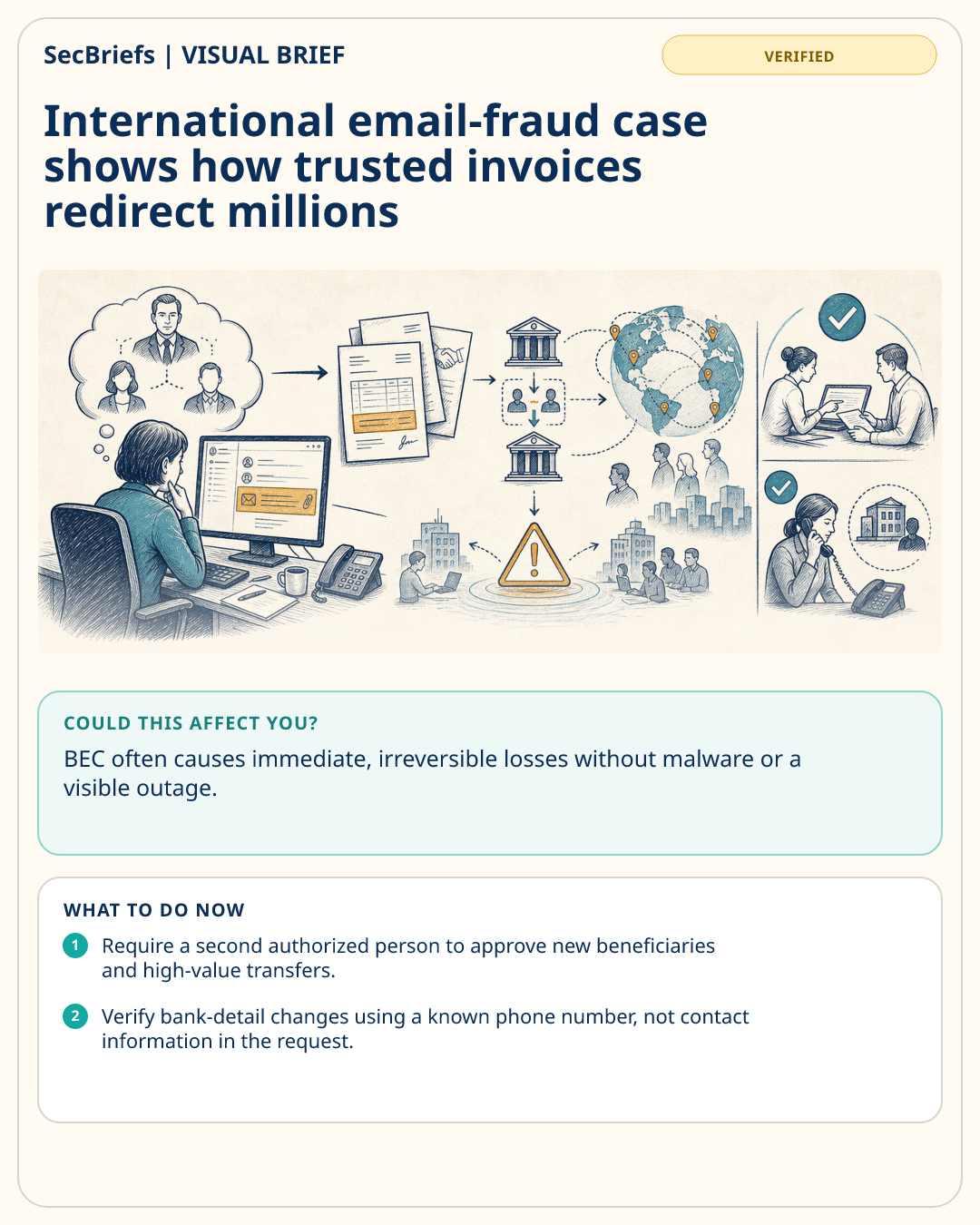
The US Department of Justice said John Muriuku Wamuigah, 36, received a sentence of approximately 23 months, which was time already served. He had been extradited from Malaysia and pleaded guilty to conspiracy to commit wire fraud. Prosecutors described a wider scheme that used false invoices, contracts and payment instructions to induce organizations to send funds to accounts controlled by conspirators. The case involved activity across several countries and US victims. Justice Department material connected the wider conspiracy to roughly $12 million in attempted or completed fraudulent transfers. Court outcomes establish Wamuigah’s admitted role; they do not mean every participant or every alleged transaction was resolved through the same proceeding. The practical warning is straightforward: a payment request can look authentic because it comes from a compromised mailbox or copies familiar business language. Organizations cannot rely on writing style, urgency or an apparently correct sender address as approval. Independent confirmation and dual control are needed before bank details change or large transfers leave the business.
WHY IT MATTERS
BEC often causes immediate, irreversible losses without malware or a visible outage. A single employee may be placed under convincing time pressure while the criminal quietly uses real supplier details and previous email threads. The sentencing shows that these schemes are organized across borders and can involve forged documents, money mules and multiple victim companies. Managers should treat payment verification as a business process, not merely an email-security feature. Clear authority limits and a reliable call-back procedure can stop a fraudulent transfer even after an inbox has been compromised.
WHO SHOULD CARE
Finance teams, accounts-payable staff, executives, small-business owners and employees who receive payment instructions should care. Banks and fraud teams also benefit from recognizing unusual beneficiary changes and acting quickly when a customer reports a mistaken transfer.
WHAT TO DO NOW
- Require a second authorized person to approve new beneficiaries and high-value transfers.
- Verify bank-detail changes using a known phone number, not contact information in the request.
- Set payment limits that match each employee’s role and review exceptions promptly.
- Preserve email headers, invoices and bank records when fraud is suspected.
- Contact the bank and law enforcement immediately because recovery chances decline rapidly.