CSO Online outlines ransomware’s shifting strains, tactics and targets
THE BRIEF
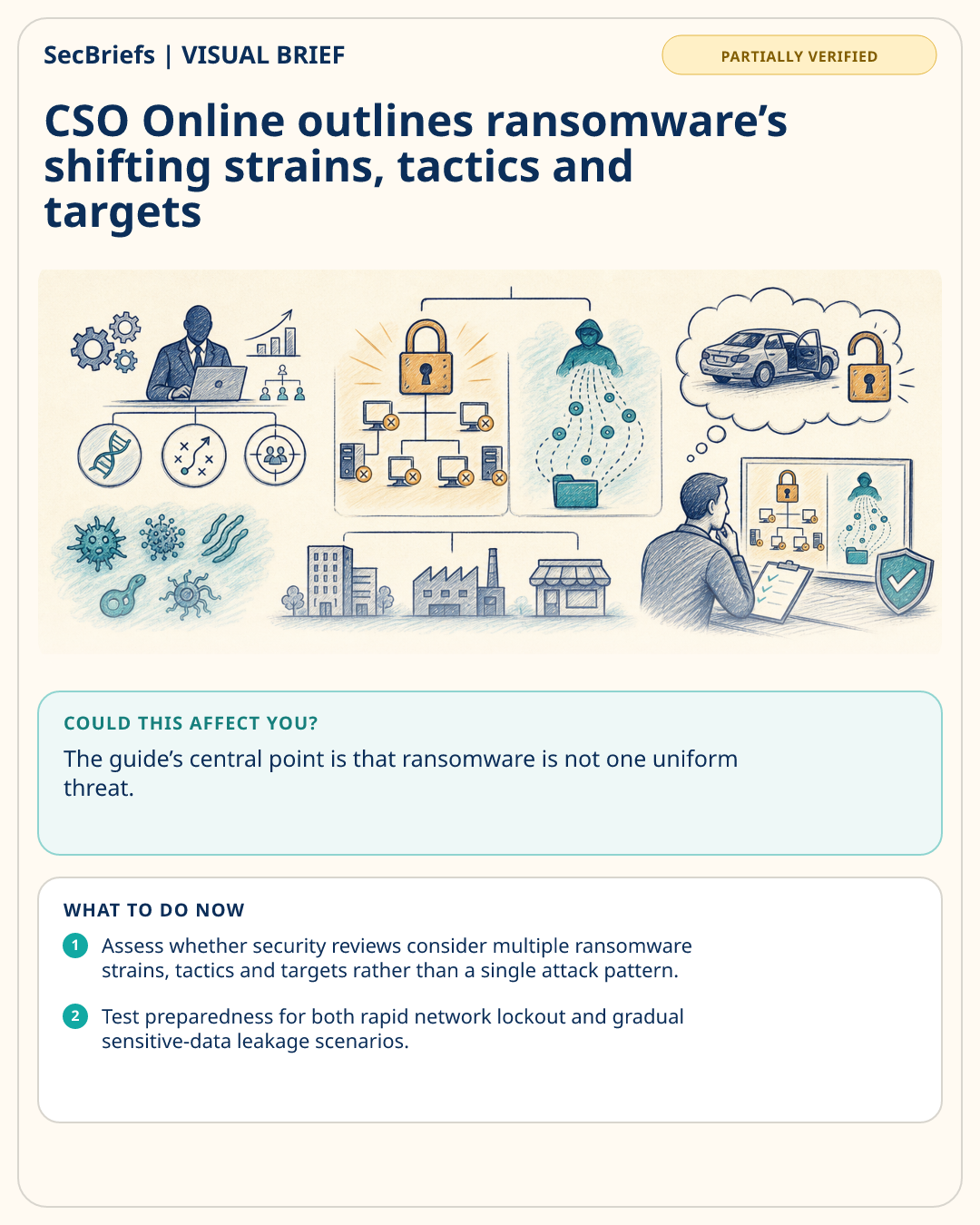
CSO Online’s February 24, 2026 guide presents ransomware as an evolving cyber threat rather than an isolated possibility. The article describes ransomware as having multiple strains, tactics and targets, and says the cybercriminals behind attacks operate their activities like a business and are motivated to maintain profits. The supplied excerpt identifies two broad tactical patterns: rapidly locking down an entire network, or slowly leaking sensitive data over time. It emphasizes that different ransomware types create different threats and may use distinct execution approaches. The guide compares vulnerability discovery to a thief searching for an unlocked car, underscoring the role of weaknesses in attack opportunities. The excerpt says the article will discuss examples, explain how ransomware works and outline ways businesses can stay ahead, but it does not provide named strains, specific incidents, affected organizations, exploitation details or measured outcomes. Its focus is educational: helping readers distinguish ransomware types and understand how tactics and targets can vary.
WHY IT MATTERS
The guide’s central point is that ransomware is not one uniform threat. Attackers may pursue rapid network lockout or gradual sensitive-data leakage, while strains, tactics and targets vary. That distinction matters because organizations cannot rely on a single assumed ransomware scenario when evaluating exposure, recovery plans or data-protection controls. Security and continuity teams should test more than one failure mode and confirm that monitoring, backups, containment and incident-response processes address both service disruption and information loss. The supplied excerpt remains conceptual and does not identify particular groups, vulnerabilities, incidents or measured defensive results.
WHO SHOULD CARE
Business leaders, security teams and defenders responsible for network resilience or sensitive data should care. Risk, continuity and incident-response planners can use the guide’s distinctions to test whether preparations address both disruption and data-leakage scenarios.
WHAT TO DO NOW
- Assess whether security reviews consider multiple ransomware strains, tactics and targets rather than a single attack pattern.
- Test preparedness for both rapid network lockout and gradual sensitive-data leakage scenarios.
- Review systems and processes for vulnerabilities that could provide the openings described in the guide.
- Use the guide’s examples and explanations to brief business, security and response teams on ransomware’s varied execution approaches.