Expert Warns AI Could Drive More Impersonation Attacks in 2026
THE BRIEF
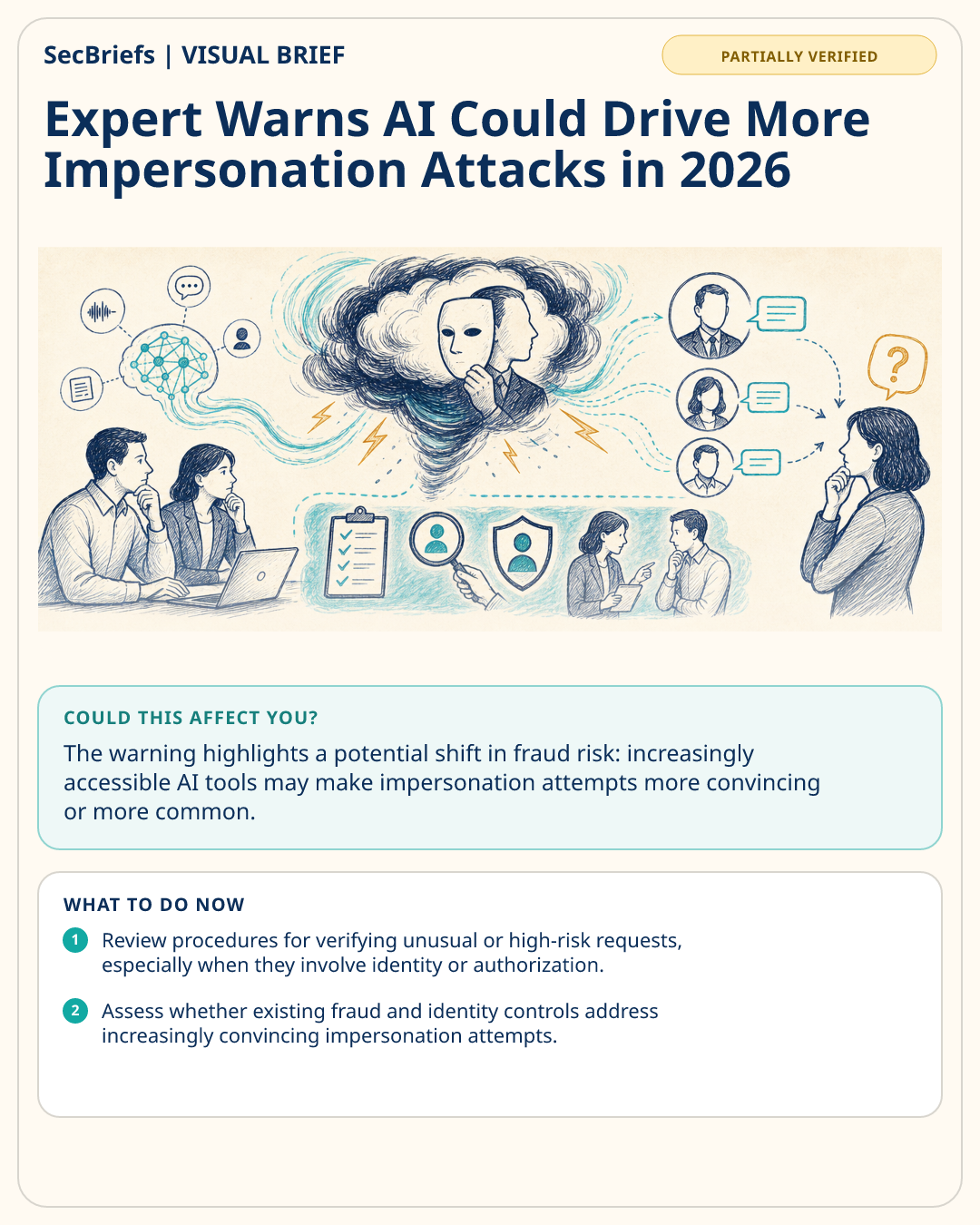
Cybersecurity Dive reports that 2026 is expected to bring an increase in fraud attacks as AI-powered tools become more widespread. A fraud prevention expert described the coming period as “the year of impersonation attacks,” pointing to what the source characterized as an explosion of AI-powered tools and an AI “perfect storm.” The report does not provide specific attack figures, affected organizations, or details about particular impersonation techniques. Instead, it presents the forecast as a warning for organizations that rely on established methods to identify fraudulent requests or verify identities. The central concern is that broader access to AI capabilities could make impersonation a more prominent fraud risk during the year. Organizations can use the warning to review how they distinguish legitimate communications from fraudulent ones, assess whether current identity checks remain appropriate, and consider how employees should respond when a request appears convincing but unusual. The outlook is predictive rather than a report of a confirmed incident.
WHY IT MATTERS
The warning highlights a potential shift in fraud risk: increasingly accessible AI tools may make impersonation attempts more convincing or more common. Even without specific incidents or attack data in the report, the forecast gives security and fraud teams a reason to examine whether existing verification practices are resilient against credible-looking requests. It also reinforces that identity assurance and employee judgment remain relevant as organizations evaluate AI-related threats. Treating the forecast as a planning signal—not proof of a particular trend—can help teams prioritize measured reviews without assuming a defined scope or impact.
WHO SHOULD CARE
Fraud prevention leaders, identity and security teams, financial services organizations, and executives responsible for approving sensitive requests should consider whether current impersonation defenses and verification processes are ready for wider AI-enabled activity.
WHAT TO DO NOW
- Review procedures for verifying unusual or high-risk requests, especially when they involve identity or authorization.
- Assess whether existing fraud and identity controls address increasingly convincing impersonation attempts.
- Remind employees to use established verification channels before acting on unexpected requests.
- Track impersonation-related signals and revisit controls as organizations learn more about AI-enabled fraud risks.