FBI identifies suspicious activity on a network used for wiretaps
THE BRIEF
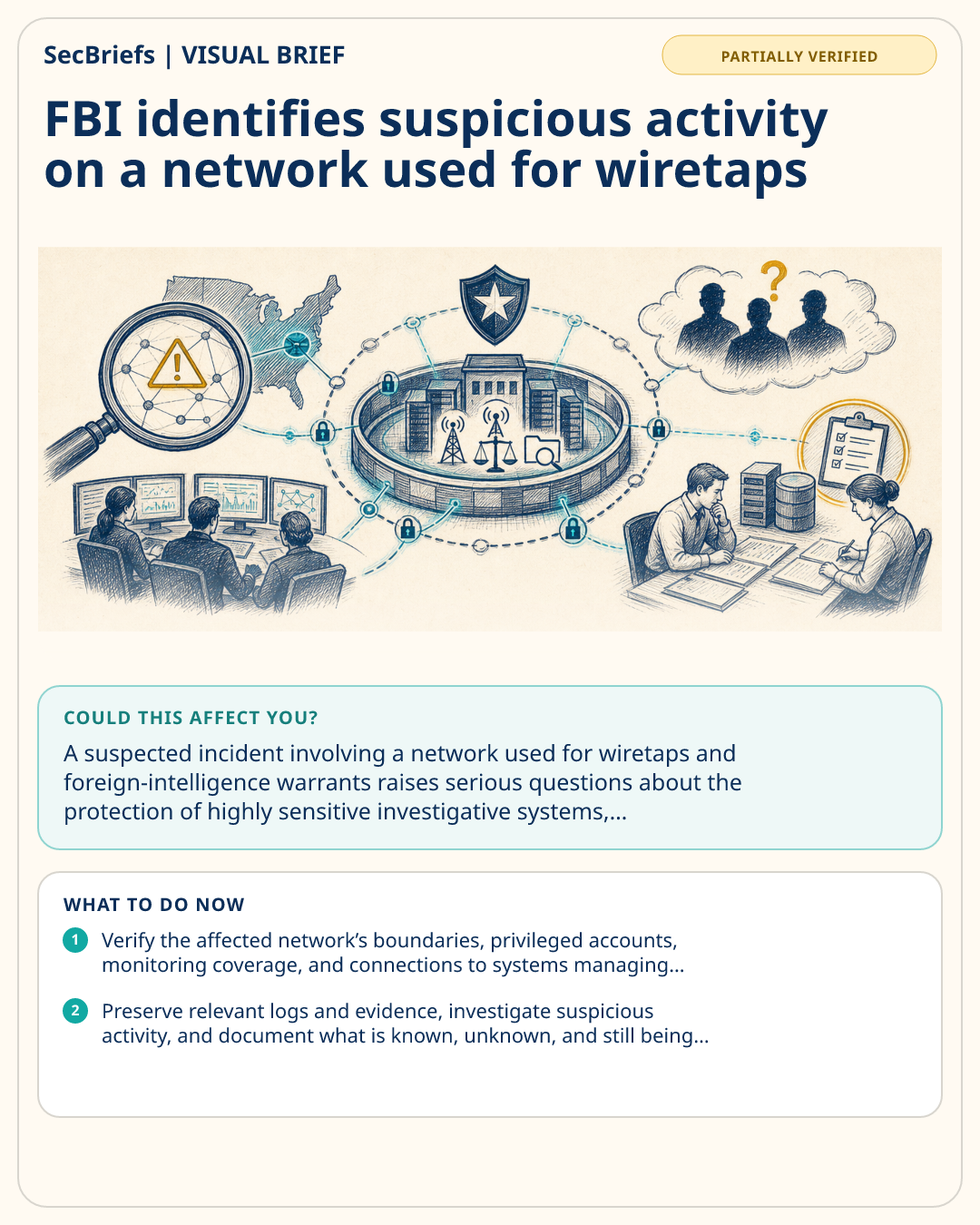
CNN reported that the FBI identified a suspected incident on a network used to manage wiretaps and foreign intelligence surveillance warrants. The FBI acknowledged suspicious activity on its networks and said it had addressed that activity while leveraging all technical capabilities to respond. The agency did not expand on its statement, according to CSO Online. The supplied information does not establish whether wiretap or warrant data was accessed, altered, or disclosed; it does not identify the suspected actor; and it does not confirm whether the event was connected to a state agency. CSO Online notes that concerns could include a state-sponsored attack, such as one associated with China, but presents that as a concern rather than an established attribution. The report also references earlier scrutiny of FBI IT security, including a 2007 Government Accountability Office finding that FBI infrastructure was less secure than the average company’s, and prior warnings from the FBI and CISA about continuing attacks by Chinese ransomware group Ghost on US organizations. The current incident’s scope and outcome remain unspecified.
WHY IT MATTERS
A suspected incident involving a network used for wiretaps and foreign-intelligence warrants raises serious questions about the protection of highly sensitive investigative systems, even though the supplied report does not confirm data access, compromise, or attribution. The FBI says it identified and addressed suspicious activity, but gives no further detail. The story also recalls earlier concerns about FBI IT security and warnings about Ghost attacks, providing context without linking those facts to the current event. Agencies handling lawful-intercept or intelligence information should therefore focus on verification, containment, and transparent assessment of exposure.
WHO SHOULD CARE
Law-enforcement and intelligence agencies, lawful-intercept system operators, government security teams, oversight bodies, and contractors supporting sensitive investigative networks should care. Analysts should avoid treating suspected activity as confirmed compromise or attribution.
WHAT TO DO NOW
- Verify the affected network’s boundaries, privileged accounts, monitoring coverage, and connections to systems managing wiretap or warrant information.
- Preserve relevant logs and evidence, investigate suspicious activity, and document what is known, unknown, and still being tested.
- Review access controls and segmentation around lawful-intercept and foreign-intelligence systems, including administrator and contractor access.