FCC proposal targets call-center data access and overseas robocall scams
THE BRIEF
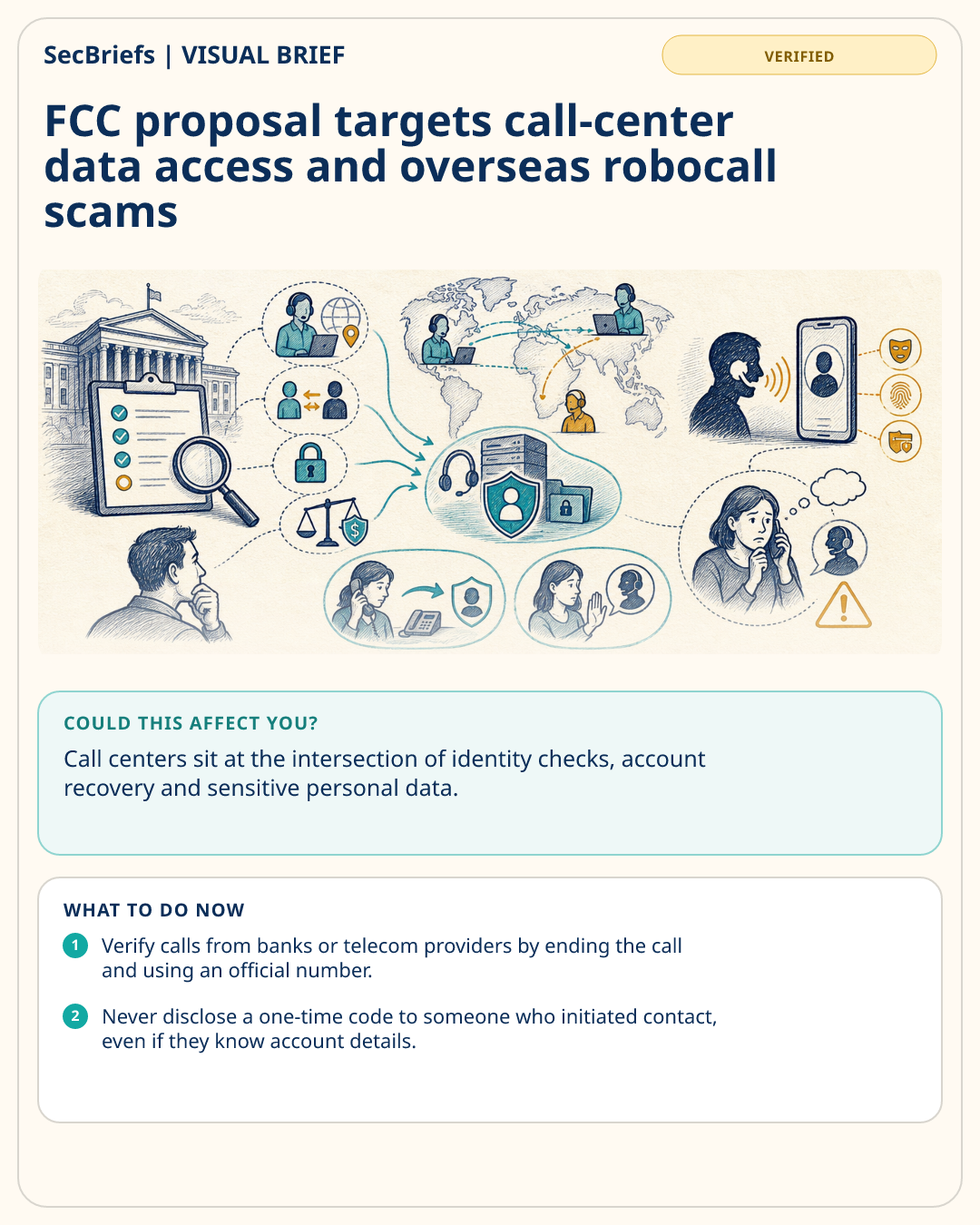
The proposal examines limits on offshore call-center use by communications providers, disclosure when a customer is served outside the United States and a right to request transfer to a domestic center. It also asks whether transactions involving sensitive customer information should be handled only in US-based contact centers. A related part considers fees or bond requirements intended to raise the cost of illegal robocall operations originating abroad. The FCC tied the proposal to privacy, data-protection and fraud concerns, including cases where criminals obtain customer information or use call-center knowledge to conduct convincing scams. Some elements, such as English-proficiency requirements, focus on service quality rather than security and remain politically or legally contestable. Consumers should not treat the proceeding as an existing protection. Scam callers can still spoof numbers, impersonate banks and use personal details to appear legitimate. The useful near-term consequence is regulatory attention to where sensitive support interactions happen and how providers trace abusive calls.
WHY IT MATTERS
Call centers sit at the intersection of identity checks, account recovery and sensitive personal data. Weak controls or insider access can turn legitimate customer-service knowledge into highly credible bank and telecom impersonation. The proposal may eventually affect where information is handled and how foreign robocall traffic is discouraged, but it does not remove the need for provider-level safeguards today. Managers should separate the security questions from the broader onshoring debate: limit data access, monitor unusual lookups and design verification so that a caller cannot authorize a risky transaction with facts obtainable from a breached record.
WHO SHOULD CARE
Telecom customers, banking customers, fraud teams, privacy officers and managers of outsourced contact centers should care. Communications providers face possible operational changes, while consumers need to understand that the FCC action began a proposal process rather than delivering immediate protection.
WHAT TO DO NOW
- Verify calls from banks or telecom providers by ending the call and using an official number.
- Never disclose a one-time code to someone who initiated contact, even if they know account details.
- Contact the provider through its official app when a caller claims urgent account trouble.
- For businesses, restrict call-center access to the minimum customer data required for each role.