Five plead guilty in Kansas ATM jackpotting case
THE BRIEF
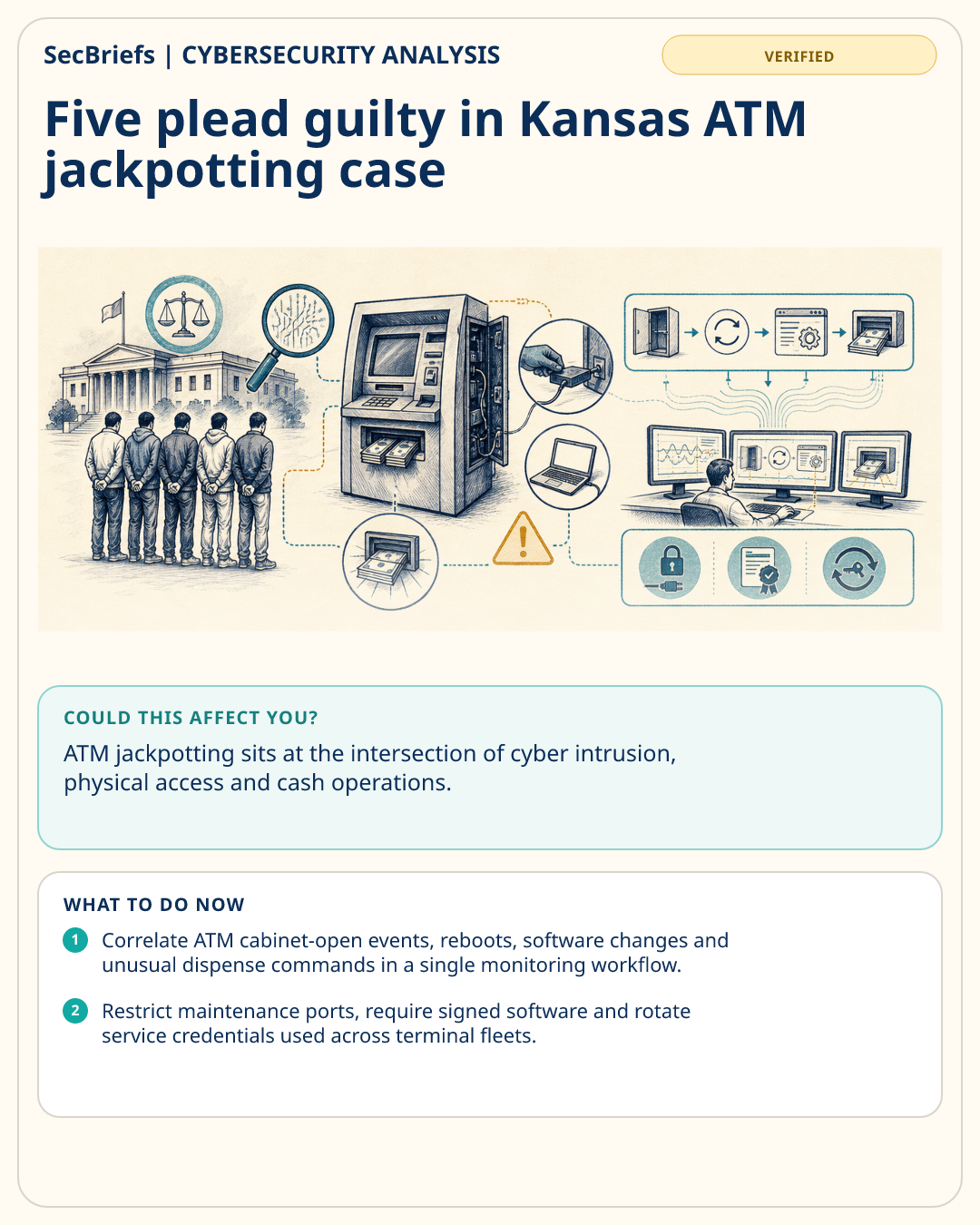
Five Venezuelan nationals pleaded guilty in federal court to attempting to force automated teller machines in Kansas to dispense cash, according to the U.S. Attorney’s Office for the District of Kansas. The 31 August announcement says the case followed an FBI investigation and involved a form of ATM malware commonly called jackpotting. In this type of attack, criminals gain physical or logical access to a machine, connect unauthorized equipment or software and instruct the cash dispenser to empty on command. The guilty pleas turn a technical fraud pattern into a concrete banking-control lesson: an ATM can pass routine customer checks while its maintenance interface or internal components are being abused. The Justice Department urged banks to take preventive measures, underscoring the role of physical inspection, software integrity and centralized monitoring. Customers are unlikely to stop this attack themselves, but they can avoid machines that appear damaged or unexpectedly opened and promptly report failed withdrawals, unusual cash behavior or suspicious service activity.
WHY IT MATTERS
ATM jackpotting sits at the intersection of cyber intrusion, physical access and cash operations. It can bypass controls that focus only on card fraud because the attacker is manipulating the terminal rather than impersonating a customer transaction. Banks therefore need telemetry that links cabinet access, software changes, maintenance sessions and cash-dispenser commands. The guilty pleas also demonstrate that even attempted theft creates investigation, downtime and reconciliation costs, making rapid detection valuable before a machine releases its full cash load.
WHO SHOULD CARE
Banks, ATM deployers, cash-in-transit providers, branch managers, fraud investigators and law-enforcement partners should care. Consumers should also report visibly tampered terminals or unexplained withdrawal errors quickly.
WHAT TO DO NOW
- Correlate ATM cabinet-open events, reboots, software changes and unusual dispense commands in a single monitoring workflow.
- Restrict maintenance ports, require signed software and rotate service credentials used across terminal fleets.
- Inspect high-risk ATMs frequently and give branch staff a clear escalation path for tampering, attached devices or abnormal cash behavior.
VERIFICATION NOTE
Verified through the U.S. Department of Justice announcement from the District of Kansas, which names the guilty pleas, FBI investigation and attempted ATM jackpotting. The brief avoids claiming a completed cash loss where the release describes attempted theft.