Former L3Harris executive sentenced to 87 months for selling zero-day exploits
THE BRIEF
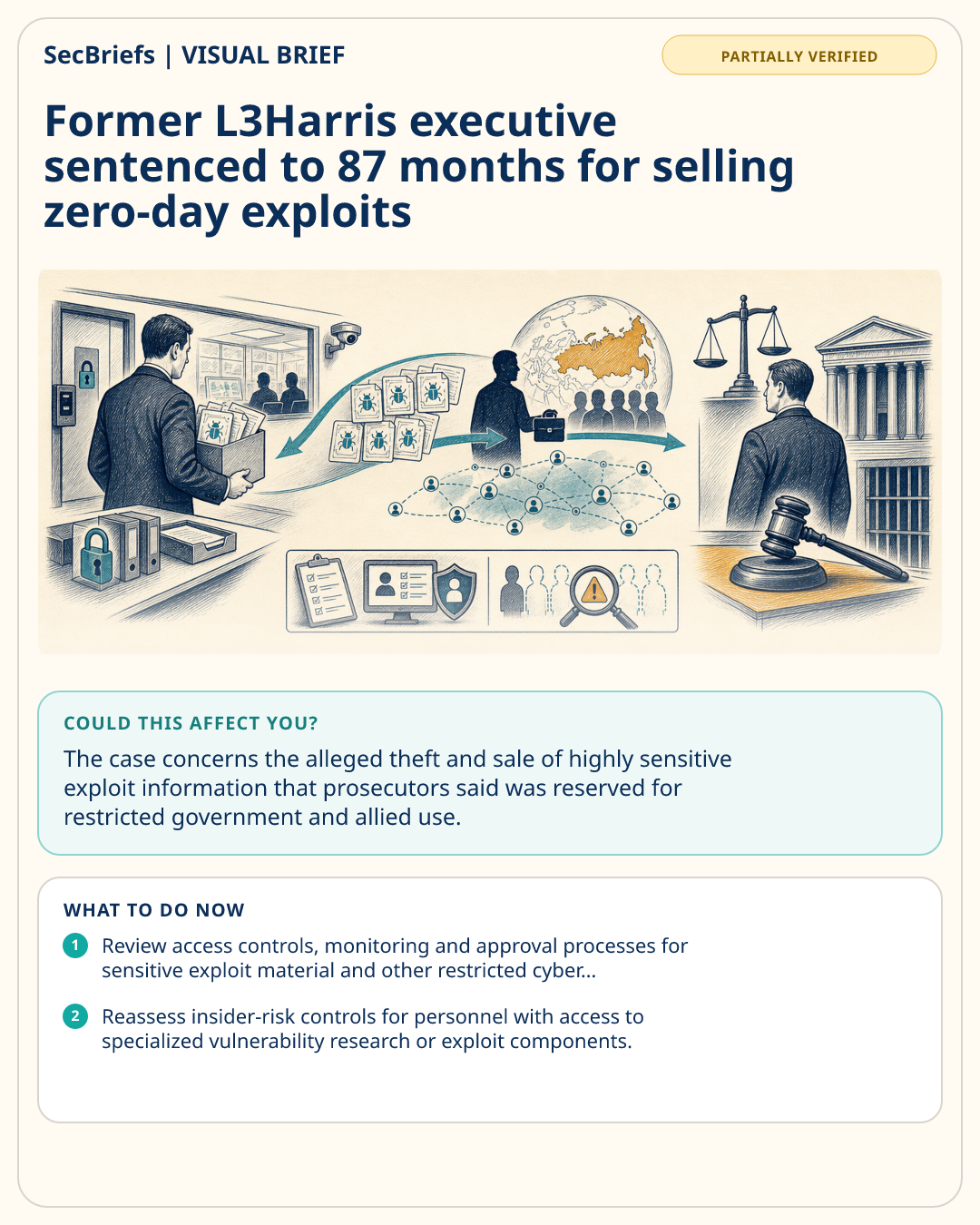
Peter Williams, a former L3Harris executive, was sentenced to 87 months in prison after pleading guilty to two counts of theft of trade secrets, according to CyberScoop. Williams admitted that, while working at Trenchant, a specialized cybersecurity unit owned by L3Harris, he took at least eight zero-day exploits or exploit components. Prosecutors said the materials were intended for restricted use by the U.S. government and allied partners. Authorities said Williams sold the stolen information to a broker that advertised itself as a reseller of hacking tools and described it as serving multiple customers, including the Russian government. The transaction allegedly involved millions of dollars. In court, the government referred to the buyer as “Company 3,” while details read aloud during the plea hearing pointed to Opera, according to the supplied account. The report identifies the buyer as a Russian broker but does not establish which customers obtained or used the exploits, whether any exploitation occurred, or what operational effects followed.
WHY IT MATTERS
The case concerns the alleged theft and sale of highly sensitive exploit information that prosecutors said was reserved for restricted government and allied use. It also illustrates the legal and security risks created when specialized cyber capabilities leave controlled environments and enter broker markets. The supplied facts do not show that the exploits were deployed or identify affected systems. The 87-month sentence records a criminal outcome for Williams, while leaving the broader consequences and customer activity unresolved.
WHO SHOULD CARE
Cybersecurity companies, government agencies, defense contractors and vulnerability researchers should care about controls around sensitive exploit material. Legal, compliance and security teams should also note the case’s alleged insider-access and broker-resale elements without assuming downstream exploitation.
WHAT TO DO NOW
- Review access controls, monitoring and approval processes for sensitive exploit material and other restricted cyber capabilities.
- Reassess insider-risk controls for personnel with access to specialized vulnerability research or exploit components.
- Document restrictions governing transfers to brokers, resellers and other external parties.
- Avoid inferring exploitation, affected systems or customer use unless supported by additional evidence.