France Titres confirms cyber incident affecting administrative-document data
THE BRIEF
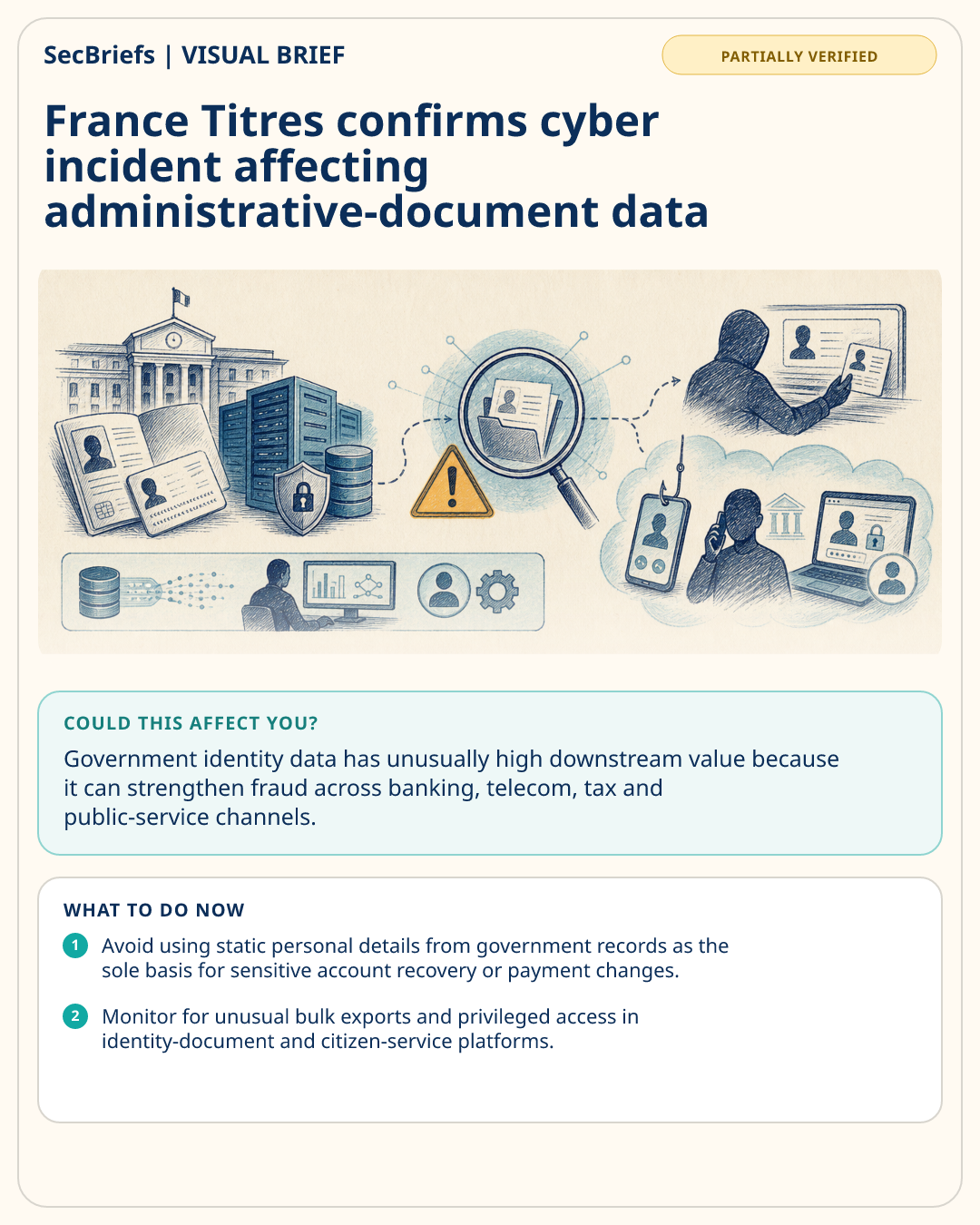
France Titres, the French government agency responsible for issuing and managing administrative documents, disclosed a cyber incident after a threat actor claimed to have stolen citizen data and offered information for sale. The agency confirmed a breach but the initial public reporting did not establish that every dataset or volume claimed by the attacker was genuine. That distinction is important because government identity systems can contain highly sensitive personal information, yet attacker advertisements often mix verified access with inflated claims. France Titres began investigating the incident and the case later drew law-enforcement attention. For citizens, the immediate concern is not only direct misuse of exposed information but also convincing follow-on fraud: official-document data can make phishing, impersonation and account-recovery attacks more credible. For government agencies, the incident reinforces the need to monitor bulk data access and privileged workflows around identity-document platforms, where a compromise can have consequences far beyond a single online account.
WHY IT MATTERS
Government identity data has unusually high downstream value because it can strengthen fraud across banking, telecom, tax and public-service channels. Even when the exact breach scope is still being established, organizations that rely on identity-document information should be prepared for increased impersonation attempts and should avoid treating static personal details as strong proof of identity. This makes stronger identity-proofing and cross-channel verification important wherever government records are used to establish trust.
WHO SHOULD CARE
French public-sector security teams, identity-verification providers, banks and citizens whose administrative records may be involved should care because exposed identity data can be reused across many unrelated services.
WHAT TO DO NOW
- Avoid using static personal details from government records as the sole basis for sensitive account recovery or payment changes.
- Monitor for unusual bulk exports and privileged access in identity-document and citizen-service platforms.
- Warn potentially affected users about phishing that references authentic government or identity information.
- Keep public statements separate between confirmed agency findings and unverified attacker claims.