Illegal loan apps turn quick credit into data-harvesting extortion
THE BRIEF
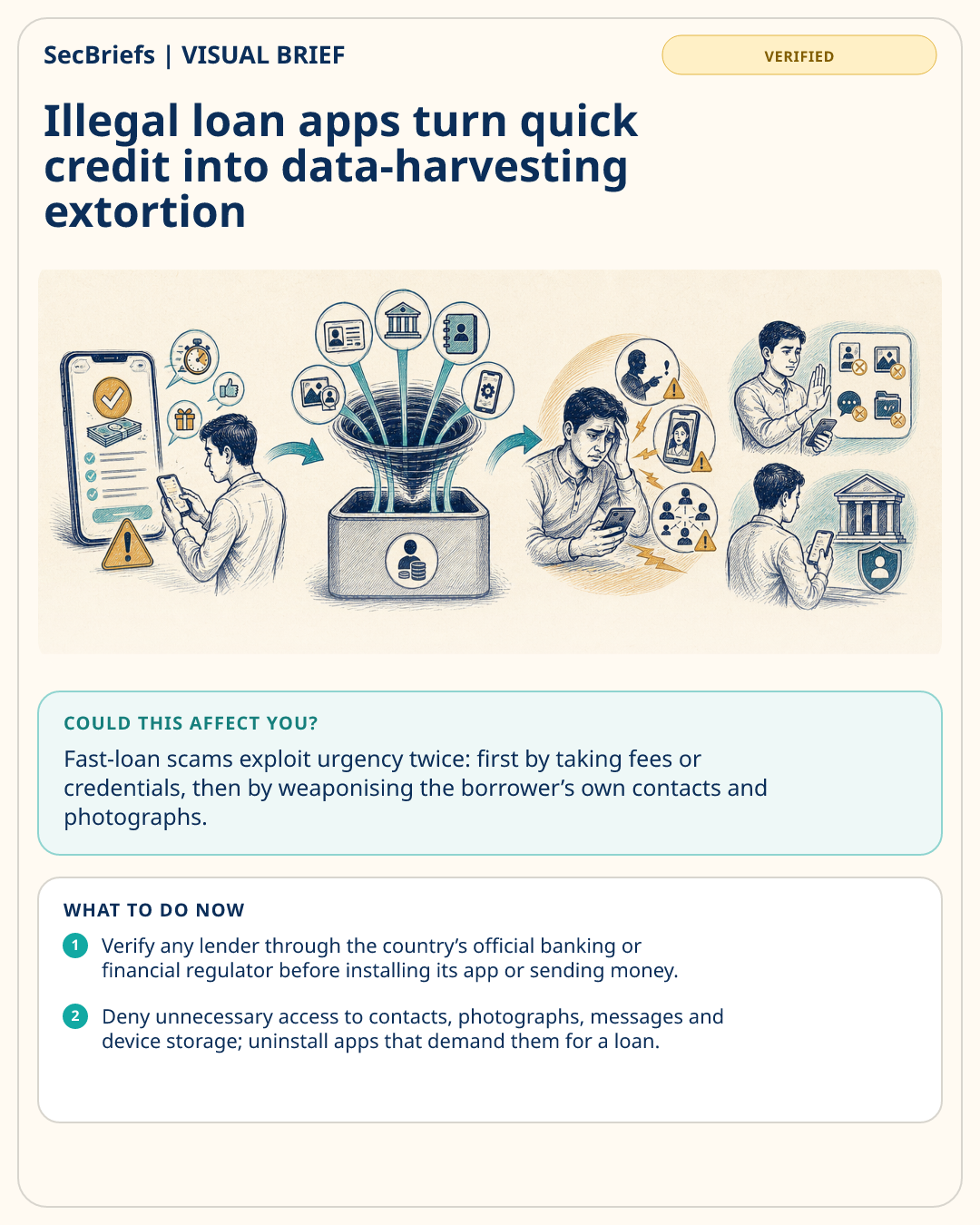
Bangladesh’s Financial Intelligence Unit has warned people not to borrow through unauthorised mobile apps and online platforms that promise fast, easy credit. The regulator says these services can collect national identity details, bank credentials, contact lists, photographs and other sensitive phone data, then use that information for harassment, extortion or threats of public exposure. Dhaka Tribune reported that the warning identified roughly 30 applications; the published lists contain a duplicate, which explains why outlet totals differ by one. The regulator also flagged advance payments, registration fees and processing charges as warning signs. Victims and people with information were directed to official reporting channels. The warning is geographically specific, but the method is widely relevant: a convincing loan interface can function as both a payment scam and a mechanism for extracting the borrower’s private data. Because the same permissions requested by ordinary finance apps can expose a victim’s social network, the safest decision must be made before installation—not after the first threat arrives.
WHY IT MATTERS
Fast-loan scams exploit urgency twice: first by taking fees or credentials, then by weaponising the borrower’s own contacts and photographs. That turns a financial loss into an identity, privacy and personal-safety problem. Banks and app stores also face a detection challenge because a polished interface can make an unauthorised lender appear legitimate long enough to attract vulnerable users. For regulated lenders, this is also a trust problem: customers may struggle to distinguish a licensed provider from an app using similar language, branding and payment rails.
WHO SHOULD CARE
Consumers seeking urgent credit, retail banks, digital-wallet providers, app stores, consumer-protection teams, fraud investigators and anyone helping a relative compare online loan offers. It also matters to telecom operators and national identity authorities receiving abuse reports.
WHAT TO DO NOW
- Verify any lender through the country’s official banking or financial regulator before installing its app or sending money.
- Deny unnecessary access to contacts, photographs, messages and device storage; uninstall apps that demand them for a loan.
- Never pay an advance fee or share banking credentials, one-time codes or national identity images with an unknown lender.
- If an app threatens exposure or harassment, preserve screenshots, transaction records and account details before reporting it.
- Banks and wallet providers should monitor beneficiary accounts repeatedly receiving small loan-processing or registration payments.
VERIFICATION NOTE
Verified through the Bangladesh Financial Intelligence Unit warning as reported by Dhaka Tribune and The Daily Star. The duplicate entry in published app lists explains the 30-versus-31 count; the brief avoids overstating the total.