International Law Enforcement Dismantles Phishing-as-a-Service Platform
THE BRIEF
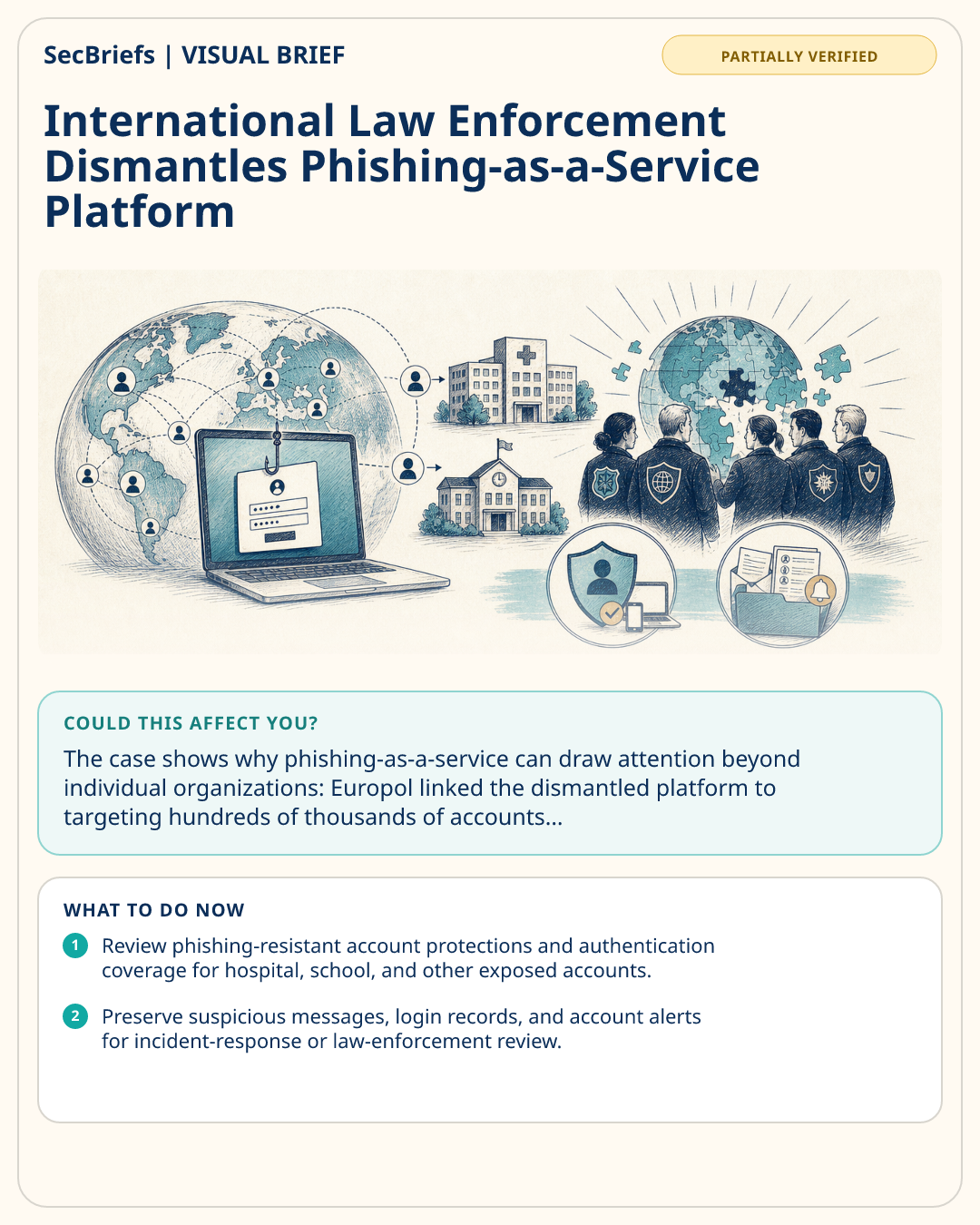
International law enforcement agencies dismantled what Europol described as a major phishing-as-a-service platform, according to The Record from Recorded Future News. Europol said the platform had been used to target hundreds of thousands of accounts worldwide, including accounts tied to hospitals and schools. The supplied report identifies the operation as a law-enforcement disruption of an established service model rather than a single phishing campaign. A phishing-as-a-service platform can provide an infrastructure or service for targeting accounts, but the supplied facts do not describe its operators, technical features, customer base, specific victims, financial losses, arrests, seizures, or the date on which the activity began. They also do not establish how many accounts were compromised or whether the dismantling permanently ended related activity. The historical significance in the available account is the combination of scale, global reach, and targeting that included healthcare and education-related accounts, followed by an international enforcement action. The report attributes the targeting and scope to Europol’s statement and does not provide additional confirmation.
WHY IT MATTERS
The case shows why phishing-as-a-service can draw attention beyond individual organizations: Europol linked the dismantled platform to targeting hundreds of thousands of accounts worldwide, including accounts tied to hospitals and schools. Those sectors may face heightened concern when account-targeting infrastructure is broadly available, but the supplied facts do not establish particular compromises, losses, or operational disruption. The enforcement action also underscores the role of international coordination, while leaving unanswered how the platform operated and whether related services remain available.
WHO SHOULD CARE
Hospital and school administrators, identity and email security teams, law-enforcement partners, incident responders, and organizations monitoring account-targeting campaigns should care. Researchers should track the reported platform without inferring unreported compromises, losses, or operator identities.
WHAT TO DO NOW
- Review phishing-resistant account protections and authentication coverage for hospital, school, and other exposed accounts.
- Preserve suspicious messages, login records, and account alerts for incident-response or law-enforcement review.
- Assess exposure to phishing services without assuming that a targeted account was compromised.