
Kimwolf Botnet Reportedly Disrupts I2P Anonymity Network
THE BRIEF
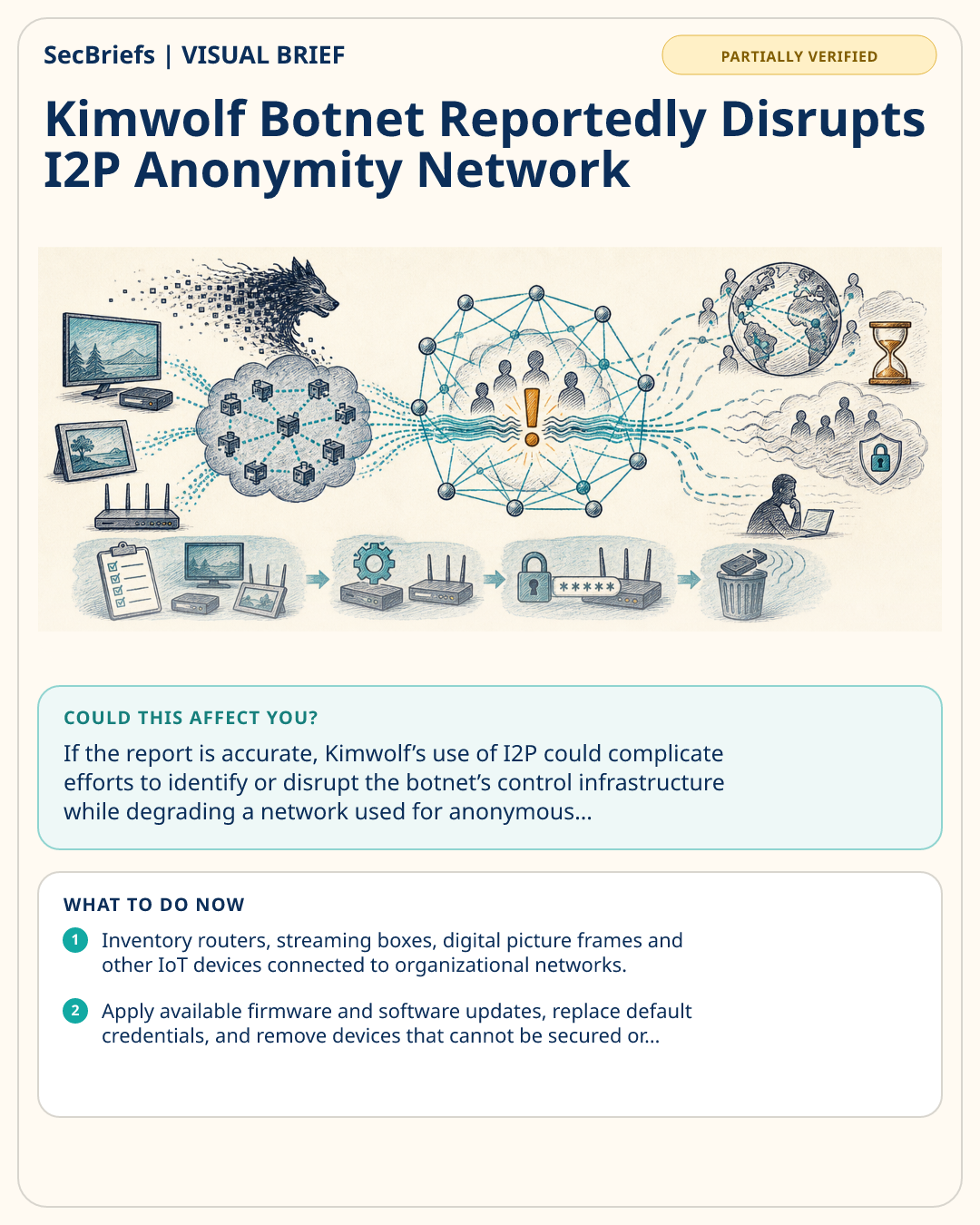
Krebs on Security reports that the Kimwolf IoT botnet has disrupted The Invisible Internet Project (I2P) for about a week. I2P is a decentralized, encrypted communications network intended to anonymize and secure online communications. According to the report, users began noticing disruptions around the same time Kimwolf’s operators started using I2P to evade takedown efforts aimed at the botnet’s control servers. Kimwolf reportedly emerged in late 2025 and rapidly infected millions of systems, including poorly secured TV streaming boxes, digital picture frames and routers. Those devices were described as being turned into relays for malicious traffic and unusually large distributed denial-of-service attacks. The incident illustrates a potential collision between a privacy-focused network’s legitimate use and abuse of that network as operational infrastructure. The supplied report excerpt ends before providing further detail, so the duration, scale and technical effects of the disruption should be treated as reported rather than independently verified.
WHY IT MATTERS
If the report is accurate, Kimwolf’s use of I2P could complicate efforts to identify or disrupt the botnet’s control infrastructure while degrading a network used for anonymous communications. Organizations operating exposed IoT equipment may face added risk if those devices are recruited as traffic relays. The account also highlights how legitimate privacy infrastructure can be affected when malicious operators use it for concealment. Security teams should therefore consider both device hardening and monitoring for unusual outbound network behavior, while treating the reported scope and impact cautiously.
WHO SHOULD CARE
IoT manufacturers, network defenders, security operations teams, internet service providers and organizations managing routers or connected consumer devices should review exposure to botnet recruitment and unexpected traffic involving privacy-focused networks.
WHAT TO DO NOW
- Inventory routers, streaming boxes, digital picture frames and other IoT devices connected to organizational networks.
- Apply available firmware and software updates, replace default credentials, and remove devices that cannot be secured or supported.
- Monitor outbound traffic for unusual volumes, unexpected relay behavior, or connections associated with I2P and investigate anomalous activity.
- Review network segmentation and egress controls so compromised IoT devices have limited access to internal systems and external services.