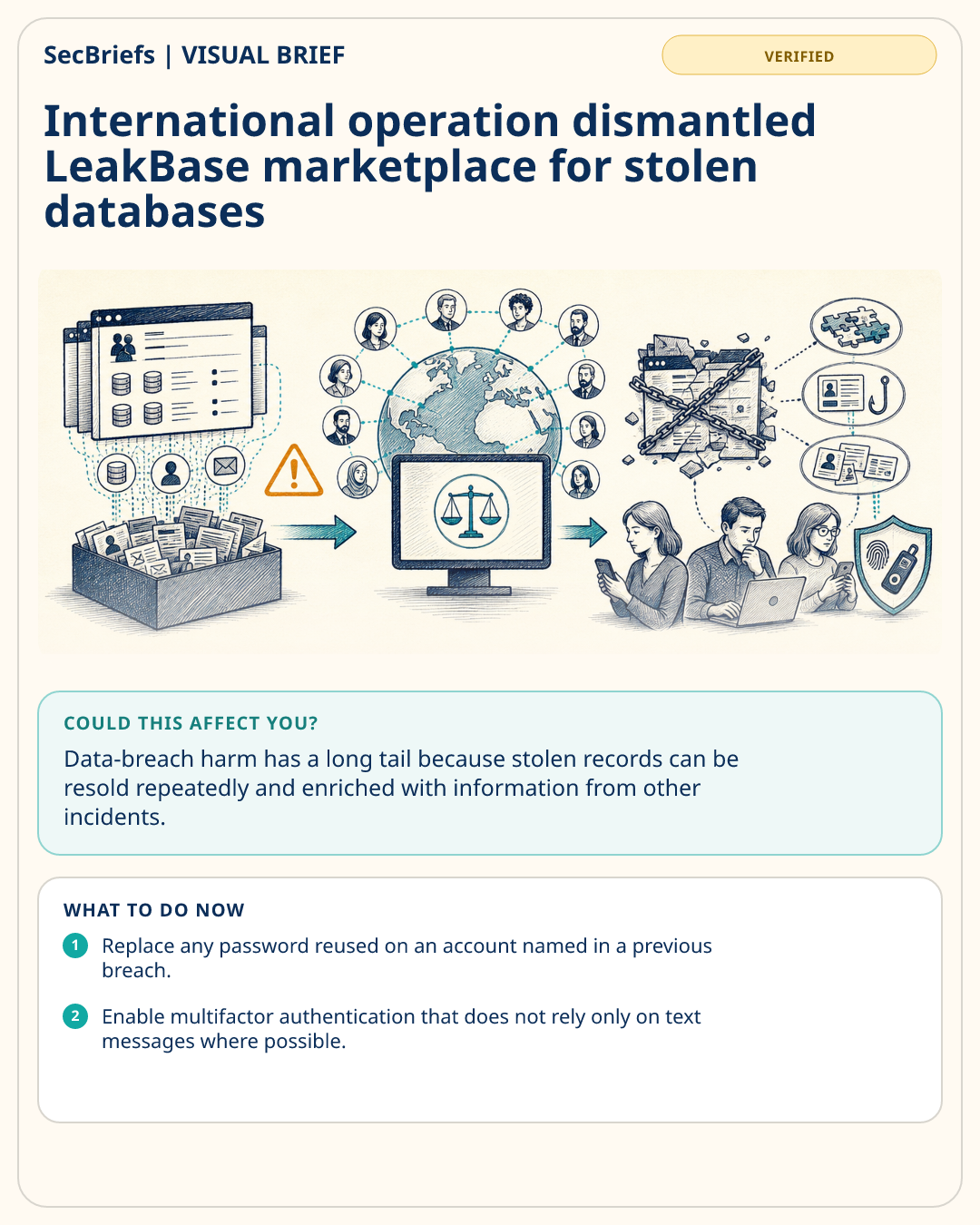
International operation dismantled LeakBase marketplace for stolen databases
THE BRIEF
The forum gave criminals a place to advertise data taken from organizations and individuals. Such markets extend the harm of a breach: records can be copied, combined with other leaks and reused for account takeover, phishing or identity fraud long after the original intrusion. Removing the forum interrupted one distribution channel but could not retrieve every copy already downloaded. Europol coordinated the international action and described investigative support across participating countries. Public material focused on the platform disruption rather than claiming that every operator, seller or buyer had been arrested. Further investigation could lead to additional identifications or proceedings. People whose information appeared in old breaches should not assume the takedown eliminates their risk. Passwords may remain usable elsewhere, and personal identifiers cannot simply be changed. The event is most useful as a reminder to address the consequences of prior exposure rather than wait for a criminal marketplace to disappear.
WHY IT MATTERS
Data-breach harm has a long tail because stolen records can be resold repeatedly and enriched with information from other incidents. A marketplace takedown raises friction for criminals and can generate evidence, but it does not make exposed passwords, identity numbers or contact details private again. Individuals still need unique credentials and account monitoring. Organizations should also avoid treating breach response as complete after a notification letter: leaked information may fuel targeted fraud months or years later, requiring durable detection, customer support and identity-protection measures.
WHO SHOULD CARE
People affected by earlier data breaches, identity-theft teams, banks and organizations handling account recovery should care. Security managers should also consider how leaked customer or employee records could be reused to defeat knowledge-based checks or create convincing phishing.
WHAT TO DO NOW
- Replace any password reused on an account named in a previous breach.
- Enable multifactor authentication that does not rely only on text messages where possible.
- Review account-recovery questions and remove answers discoverable from leaked personal data.
- Monitor financial and high-value accounts for unfamiliar devices or profile changes.
- Organizations should flag breached identifiers as weak evidence during customer verification.