Lloyds app bug exposed transaction details across customer accounts
THE BRIEF
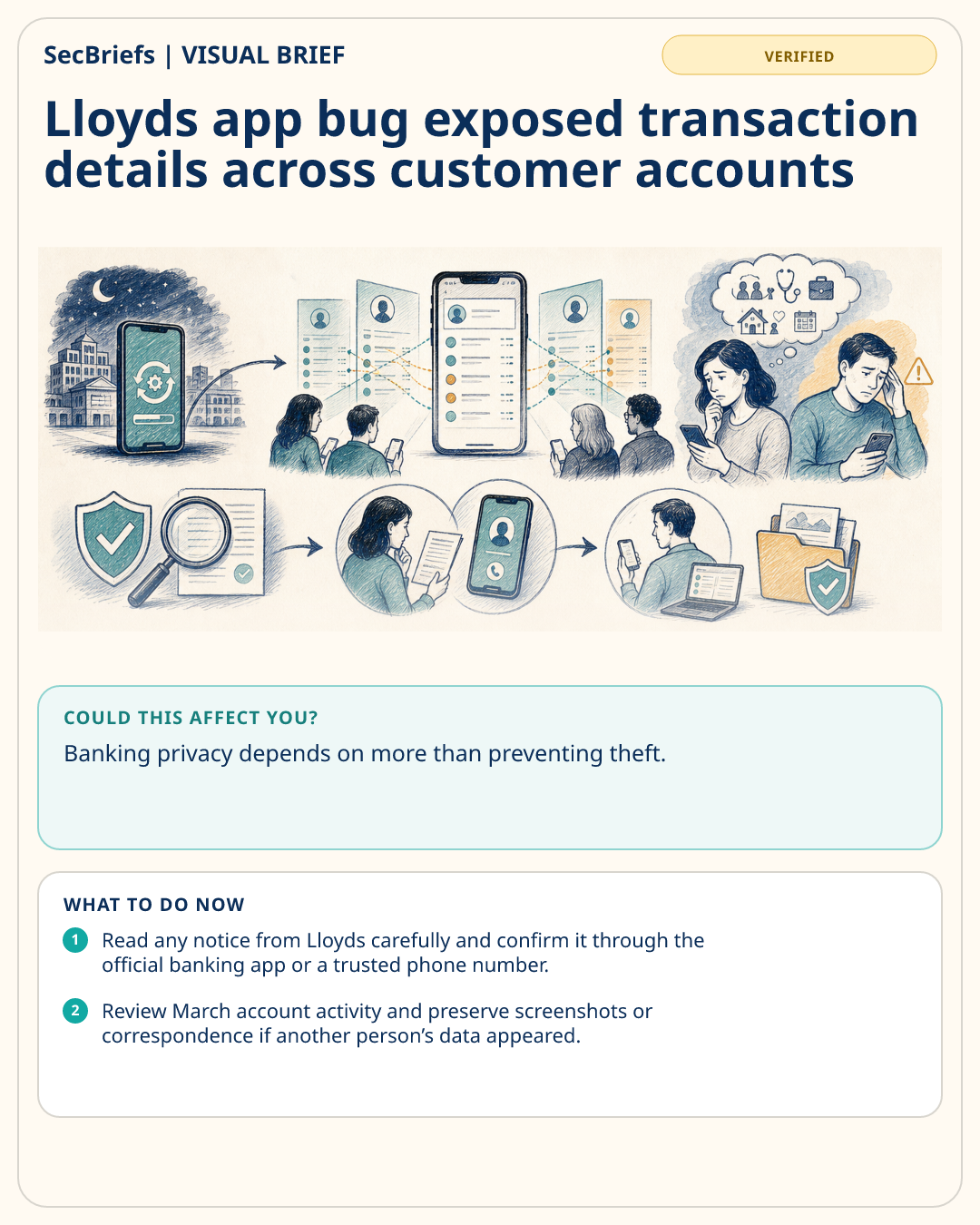
In a letter to the UK Parliament’s Treasury Committee, Lloyds said up to 447,936 customers were potentially affected. About 114,182 people opened transaction details that were not theirs. The exposed information could include account details, payment references and, in some cases, national insurance numbers. Transactions involving customers of other banks may also have appeared. Lloyds said it corrected the problem, notified regulators and found no evidence that the exposure caused fraud or financial loss at the time of its response. The bank also reported compensation payments to customers who experienced distress. Those statements do not eliminate privacy risk: transaction descriptions can reveal employers, medical services, personal relationships or regular financial habits even when money cannot be moved. The incident was a software and privacy failure, not a reported criminal intrusion. Customers did not need to change passwords solely because of the bug, but affected people could reasonably review the bank’s notice, preserve records and challenge unfamiliar use of their information.
WHY IT MATTERS
Banking privacy depends on more than preventing theft. Transaction histories can expose sensitive life patterns and give fraudsters material for convincing impersonation, even when account credentials remain secure. For bank leaders, the event shows why customer-data isolation must be tested under real concurrency conditions before an app update reaches millions of users. For customers, the distinction between “no account security issue” and “no harm” matters: unwanted disclosure can still create distress, targeted scam risk and a need to monitor communications that appear to reference genuine payments.
WHO SHOULD CARE
Lloyds, Halifax and Bank of Scotland customers are directly affected, particularly anyone notified by the bank. Digital-banking teams, privacy officers and software managers should also care because the error crossed customer boundaries during an ordinary production update.
WHAT TO DO NOW
- Read any notice from Lloyds carefully and confirm it through the official banking app or a trusted phone number.
- Review March account activity and preserve screenshots or correspondence if another person’s data appeared.
- Report suspicious messages that reference real transactions without replying or using embedded links.
- Ask the bank what information was exposed and how complaints or compensation are handled.