Man sentenced to eight years in tax refund fraud case
THE BRIEF
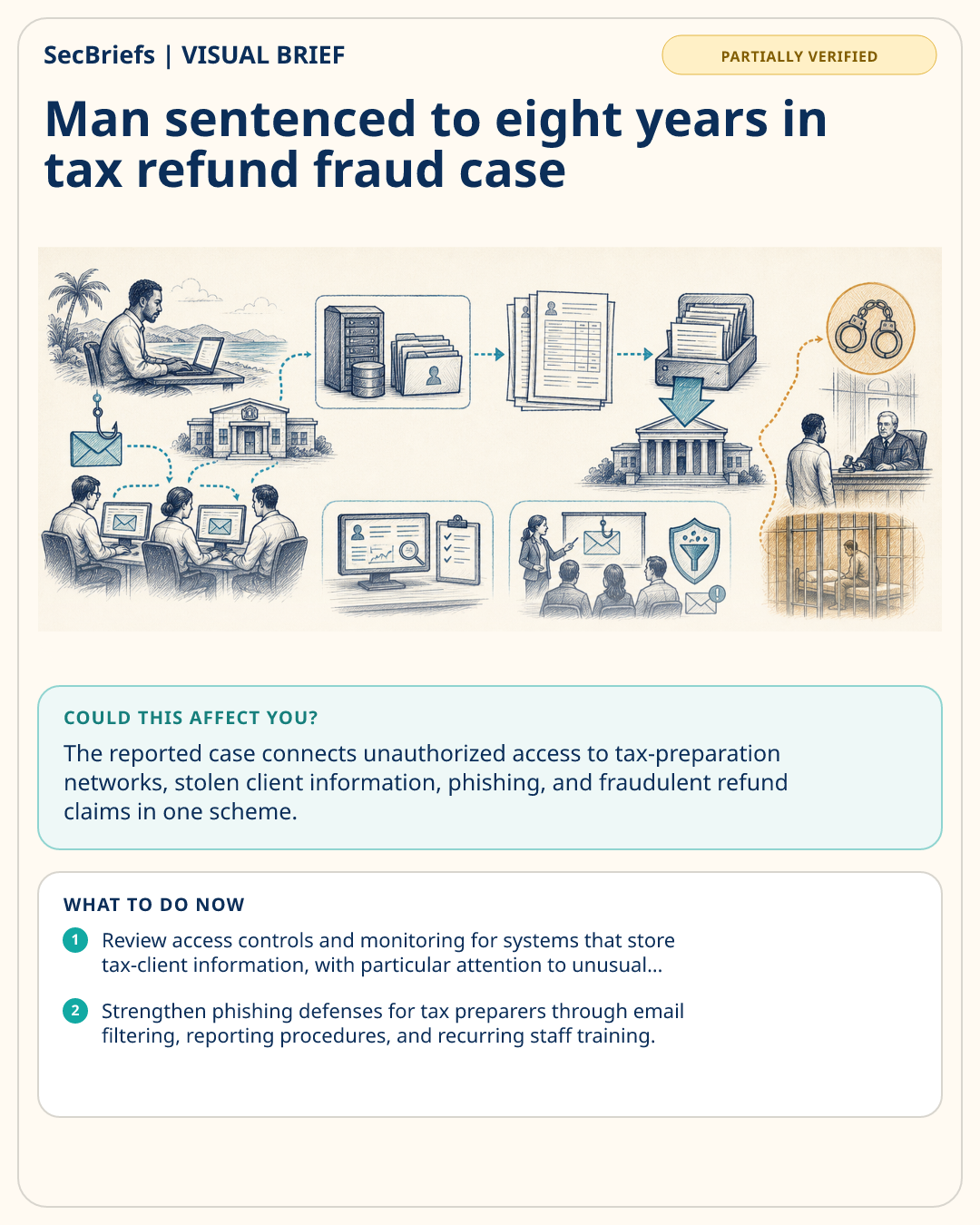
CyberScoop reported that Matthew Abiodun Akande, a 37-year-old Nigerian man, was sentenced to eight years in prison after prosecutors said he participated in a five-year scheme targeting the U.S. government through fraudulent tax returns. According to the Justice Department and court records cited by the report, Akande and at least three co-conspirators broke into networks of tax preparation firms, stole sensitive client data, and used victims’ personal information to seek tax refunds. From the start of the activity through June 2021, the group filed more than 1,000 fraudulent returns requesting more than $8.1 million, prosecutors said, and collectively obtained more than $1.3 million. Officials also said Akande sent phishing emails to five Massachusetts-based tax preparers to advance the scheme. The report said Akande was living in Mexico during the activity. The available account describes the sentence and alleged conduct; it does not establish additional scope beyond those figures.
WHY IT MATTERS
The reported case connects unauthorized access to tax-preparation networks, stolen client information, phishing, and fraudulent refund claims in one scheme. The figures cited by prosecutors—more than 1,000 returns seeking over $8.1 million and more than $1.3 million obtained—show why tax-preparation organizations must treat client data and refund workflows as linked security concerns. The sentence also underscores that cyber-enabled tax fraud can result in substantial criminal penalties, although the available report does not describe broader impacts beyond this case.
WHO SHOULD CARE
Tax preparation firms, tax professionals, financial institutions handling refund payments, and security teams responsible for client-data protection should review the reported attack methods and the use of phishing against preparers.
WHAT TO DO NOW
- Review access controls and monitoring for systems that store tax-client information, with particular attention to unusual access by accounts and networks.
- Strengthen phishing defenses for tax preparers through email filtering, reporting procedures, and recurring staff training.
- Add verification checks for tax-return and refund requests, especially when client information or account details change unexpectedly.
- Limit and audit access to sensitive client data so unauthorized use can be identified and investigated promptly.