McGraw-Hill confirmed data exposure tied to a Salesforce-hosted webpage
THE BRIEF
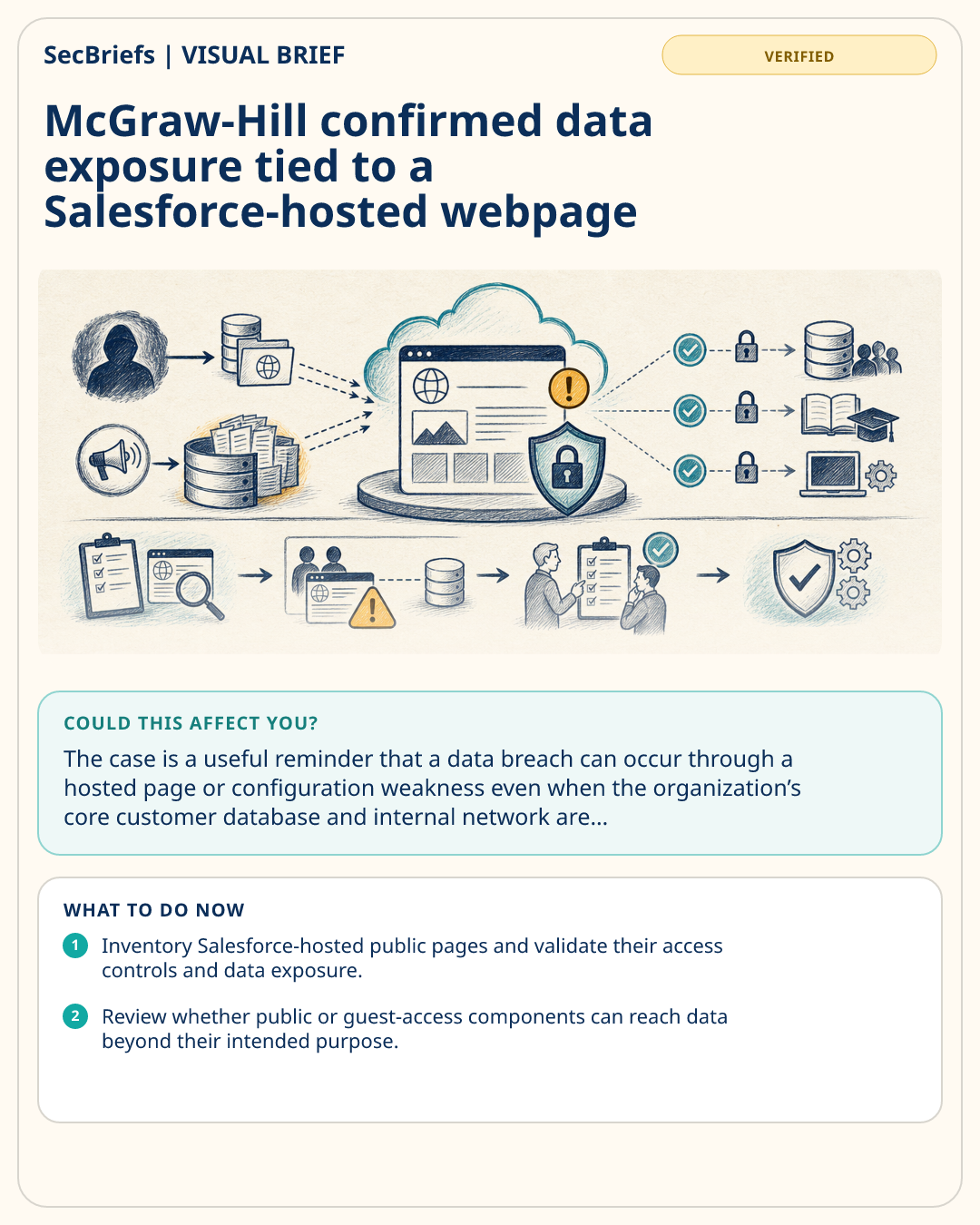
Education company McGraw-Hill confirmed that unauthorized actors accessed a limited set of data associated with a webpage hosted on Salesforce’s platform. The company said the activity appeared connected to a broader Salesforce-environment misconfiguration affecting multiple organizations. McGraw-Hill stated that the incident did not involve unauthorized access to its Salesforce accounts, customer databases, courseware or internal systems, and said the exposed information did not include Social Security numbers, financial-account information or student data from its education platforms. The disclosure followed an extortion claim by ShinyHunters, which asserted possession of a far larger set of Salesforce records. McGraw-Hill’s statement did not validate that claim and characterized the accessed data as limited and non-sensitive. The affected webpages were secured, external cybersecurity specialists were involved in the investigation and the company said it was working with Salesforce to strengthen protections around the issue. publicly.
WHY IT MATTERS
The case is a useful reminder that a data breach can occur through a hosted page or configuration weakness even when the organization’s core customer database and internal network are not compromised. Public reporting can also contain sharply different claims from the victim and the extortion actor. Security teams should preserve that distinction rather than treating an attacker’s stated record count as confirmed fact. For organizations using large SaaS platforms, exposed web components, guest access and configuration drift require the same governance attention as traditional infrastructure.
WHO SHOULD CARE
Education providers, SaaS administrators, privacy teams, security leaders and organizations using Salesforce-hosted public pages or integrations should care. Procurement and vendor-risk teams reviewing SaaS exposure should also pay attention.
WHAT TO DO NOW
- Inventory Salesforce-hosted public pages and validate their access controls and data exposure.
- Review whether public or guest-access components can reach data beyond their intended purpose.
- Separate confirmed company findings from extortion-group claims when assessing breach scope.
- Coordinate SaaS configuration reviews with the provider and retain evidence for follow-up investigation.
VERIFICATION NOTE
Historical backfill verified against the cited BleepingComputer report and McGraw-Hill statement described there.