McKesson confirms customer data theft as extortion claims grow
THE BRIEF
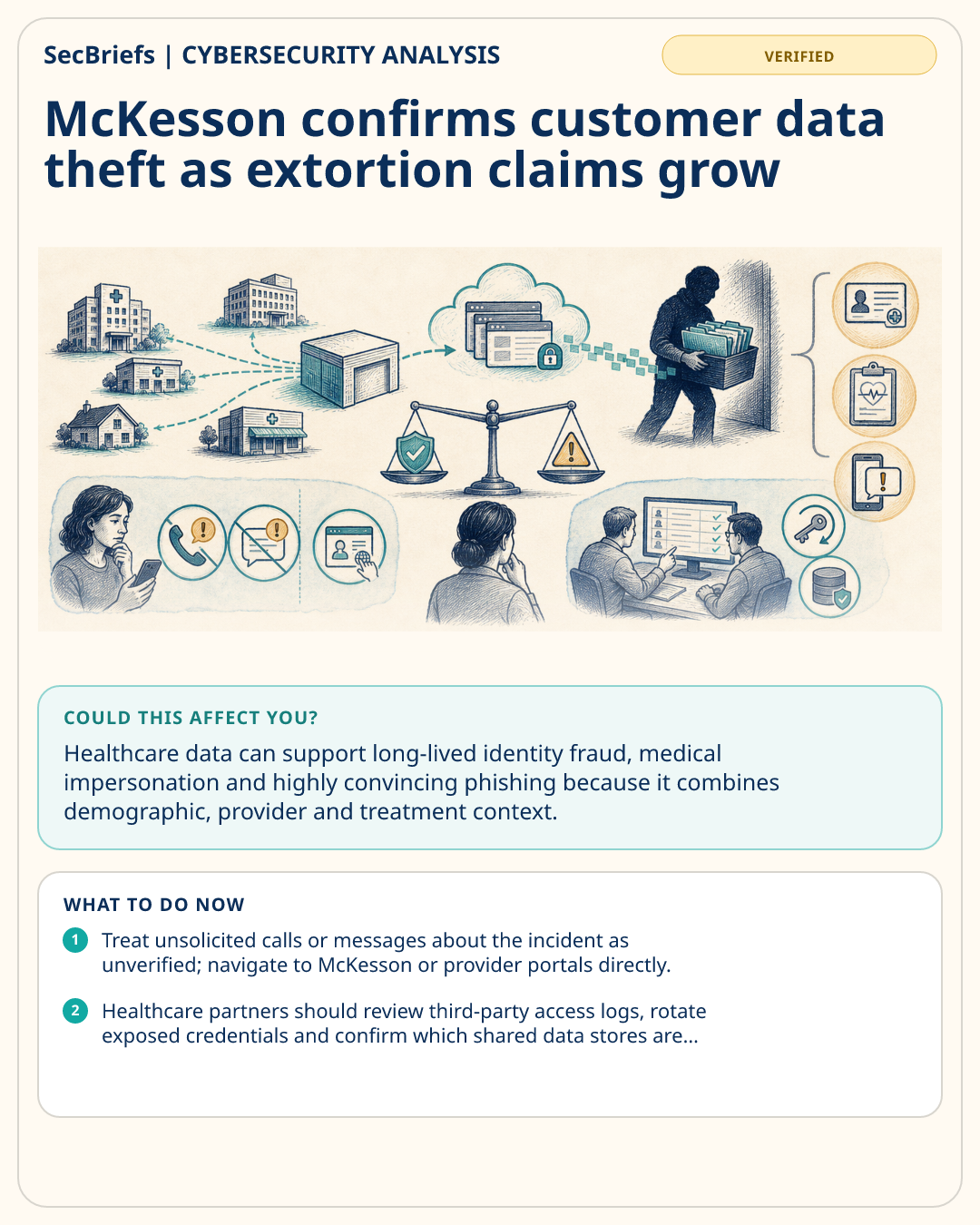
McKesson has confirmed that attackers accessed third-party applications and removed customer data, adding a healthcare-scale incident to the recent wave of data-theft extortion. CyberScoop reported the company’s response on 31 August after the ShinyHunters group claimed it held roughly 284 million records and demanded payment. McKesson’s Securities and Exchange Commission filing says the company discovered a cybersecurity incident on 25 August and that the investigation remains at an early stage. The company has not validated the attacker’s record count, the number of affected people or the full data set, so those figures remain allegations rather than established facts. Independent reporting says the claimed material could include personal and protected health information, but notifications and confirmed scope may change as forensic work continues. Patients and partners should avoid assuming silence means they are unaffected, while also resisting unsolicited messages that use the breach headline to demand passwords, payments or immediate identity verification.
WHY IT MATTERS
Healthcare data can support long-lived identity fraud, medical impersonation and highly convincing phishing because it combines demographic, provider and treatment context. Even before McKesson confirms the affected population, criminals can exploit public attention around the incident with fake breach notices and call-center scripts. The third-party-application detail also matters operationally: large distributors sit between providers, pharmacies and patients, so identity, access and data-retention controls across connected services are part of the same risk boundary as McKesson’s core network.
WHO SHOULD CARE
Patients, pharmacies, healthcare providers, insurers, privacy teams, identity-fraud operations, legal counsel and every organization integrated with McKesson applications should monitor verified notices, suspicious outreach and shared access paths.
WHAT TO DO NOW
- Treat unsolicited calls or messages about the incident as unverified; navigate to McKesson or provider portals directly.
- Healthcare partners should review third-party access logs, rotate exposed credentials and confirm which shared data stores are in scope.
- Patients who receive a confirmed notice should follow its monitoring guidance and consider a credit freeze if identity data was exposed.