Microsoft and Europol disrupt Tycoon 2FA phishing platform
THE BRIEF
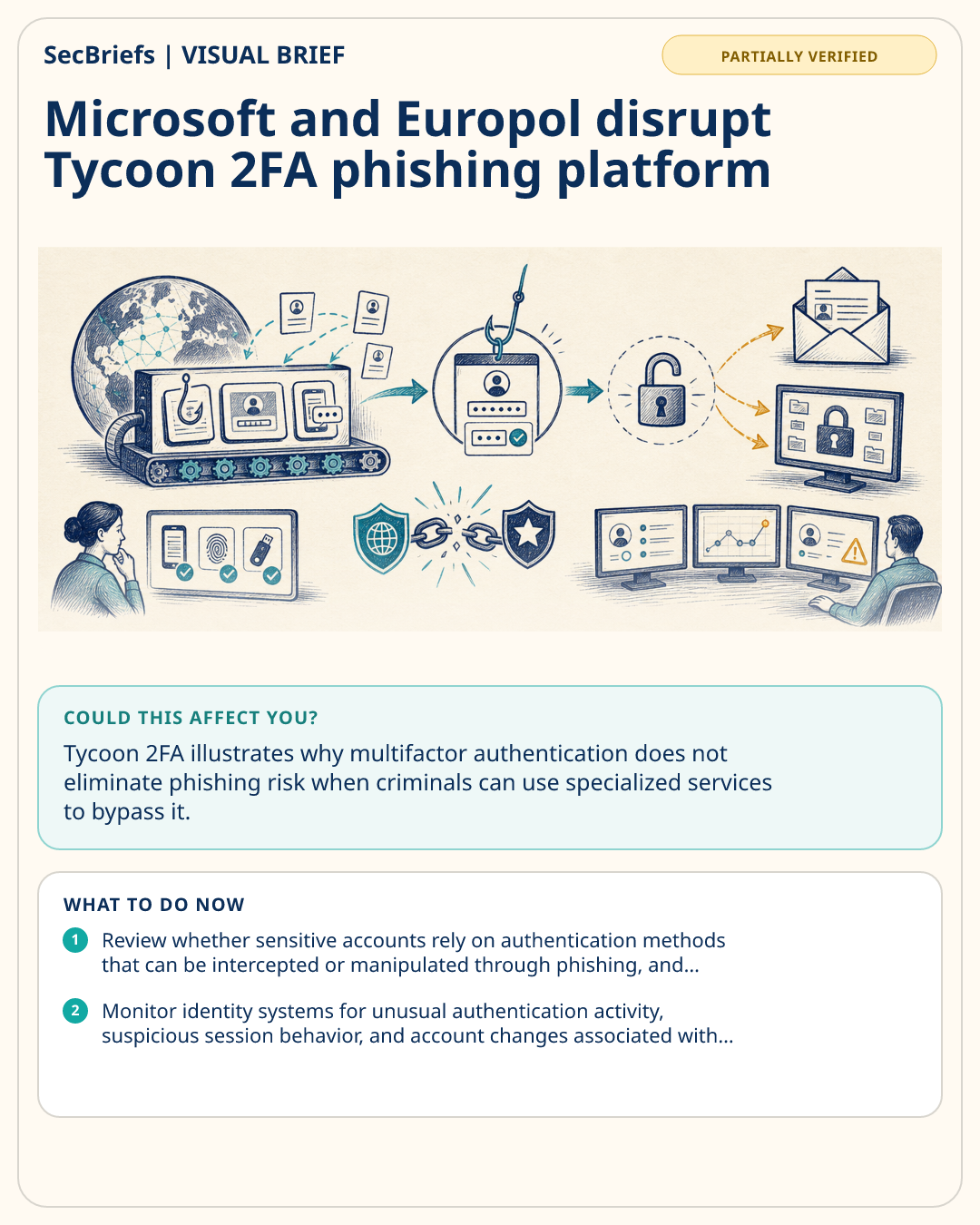
According to Cybersecurity Dive, Microsoft and Europol disrupted Tycoon 2FA, described in the supplied headline as a global phishing platform. The service helped cybercriminals bypass multifactor authentication, a capability that could undermine protections organizations increasingly rely on to secure accounts. The excerpt also links Tycoon 2FA activity to business email compromise and ransomware. The supplied information does not specify how the disruption was carried out, which infrastructure was affected, how many operators or users were involved, or whether the service has stopped operating completely. It also does not identify particular victims or quantify financial, operational, or data-related consequences. The report nevertheless places the platform within a broader criminal ecosystem in which phishing is used to defeat multifactor authentication before enabling follow-on activity. For defenders, the development is relevant because an authentication control can remain in place while being circumvented through a phishing service designed for that purpose. The account is attributed to Cybersecurity Dive and was published March 5, 2026.
WHY IT MATTERS
Tycoon 2FA illustrates why multifactor authentication does not eliminate phishing risk when criminals can use specialized services to bypass it. Cybersecurity Dive says the service supported business email compromise and ransomware, but the supplied excerpt gives no detail on victims, scale, disruption methods, or lasting outcomes. The case therefore matters as a warning about attacks that target the authentication process rather than simply stealing passwords. Organizations should treat phishing-resistant authentication, account monitoring, and response to suspicious login activity as complementary controls, while preserving uncertainty about the platform’s full reach and the effectiveness of the reported disruption.
WHO SHOULD CARE
Security leaders, identity and access administrators, email teams, incident responders, and organizations exposed to business email compromise or ransomware should care. Policymakers and technology providers should also track how phishing services affect multifactor authentication.
WHAT TO DO NOW
- Review whether sensitive accounts rely on authentication methods that can be intercepted or manipulated through phishing, and prioritize stronger available options.
- Monitor identity systems for unusual authentication activity, suspicious session behavior, and account changes associated with possible phishing.