Ransomware activity rises in IT and food sectors, reports say
THE BRIEF
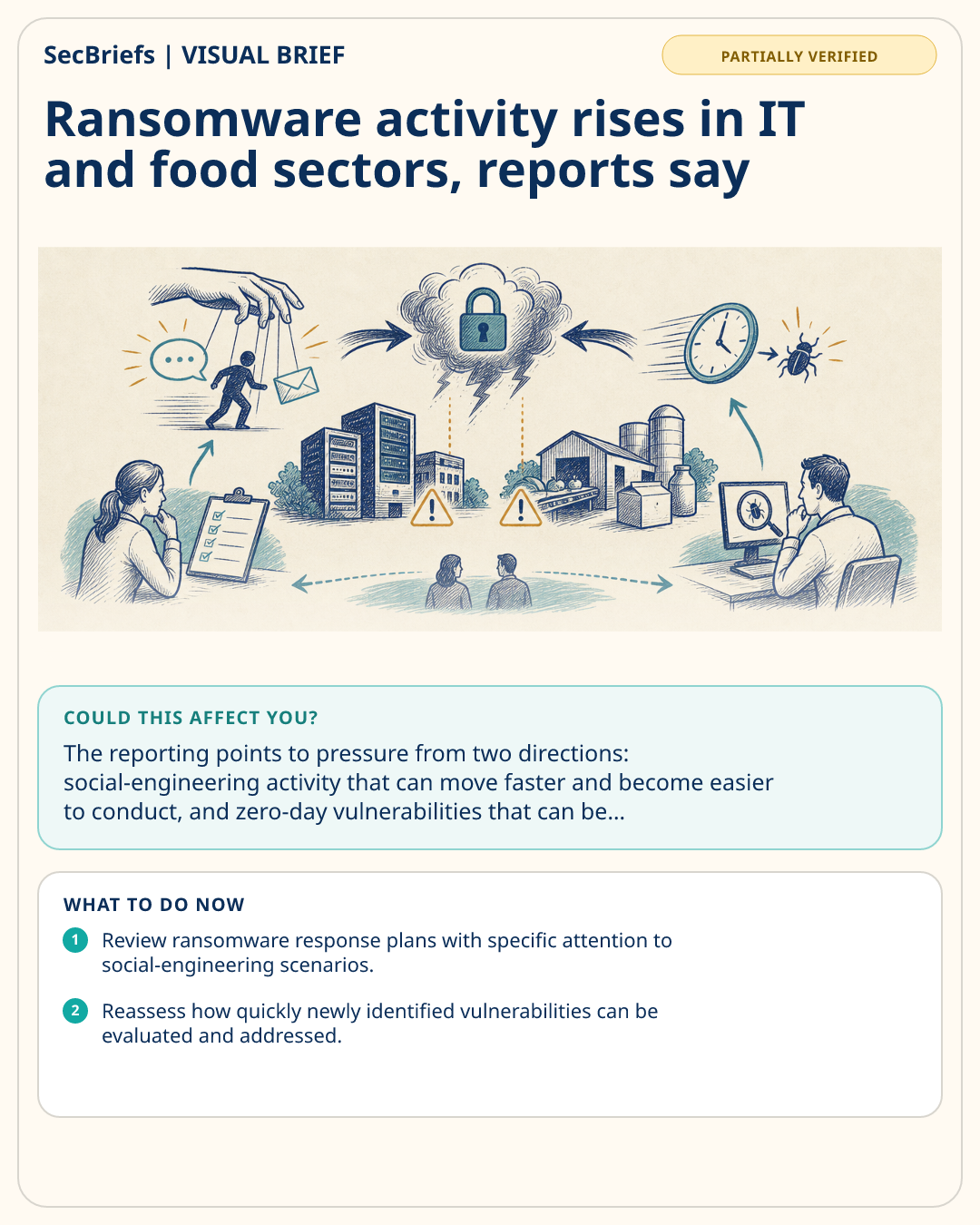
Cybersecurity Dive reports that ransomware attacks are increasing against the information technology and food sectors, citing new reports from two information sharing and analysis centers. The reports identify two developments as part of the changing threat picture: social engineering is becoming faster and easier, and attackers are weaponizing zero-day vulnerabilities more quickly and readily. The supplied account does not specify the organizations affected, the number of incidents, the vulnerabilities involved, or whether any particular attack succeeded. It also does not establish that the two trends caused every increase in ransomware activity. For security and resilience teams, the report is a warning to assess both human-targeted deception and the speed at which newly discovered vulnerabilities may be turned into attack tools. Organizations in IT and food-related environments can use the reporting as a prompt to revisit preparedness for ransomware, social-engineering attempts, and zero-day vulnerability response, while treating the underlying findings as reported rather than independently verified here.
WHY IT MATTERS
The reporting points to pressure from two directions: social-engineering activity that can move faster and become easier to conduct, and zero-day vulnerabilities that can be weaponized quickly. Together, those trends may reduce the time organizations have to identify suspicious activity or respond to newly relevant flaws. The supplied information does not describe specific victims, incidents, or outcomes, so the significance is preparedness-focused rather than evidence of a defined campaign. IT and food-sector organizations should consider whether their ransomware planning addresses both people-focused deception and rapid vulnerability response.
WHO SHOULD CARE
Security leaders, vulnerability-management teams, incident responders, and technology operators in the IT and food sectors should review their readiness for ransomware, social engineering, and possible zero-day exploitation.
WHAT TO DO NOW
- Review ransomware response plans with specific attention to social-engineering scenarios.
- Reassess how quickly newly identified vulnerabilities can be evaluated and addressed.
- Brief employees and relevant teams on the reported rise in faster, easier social-engineering activity.
- Confirm that IT and food-sector stakeholders know their roles during a ransomware or zero-day response.