Ransomware Negotiation Forces Security Teams to Balance Recovery, Law and Ethics
THE BRIEF
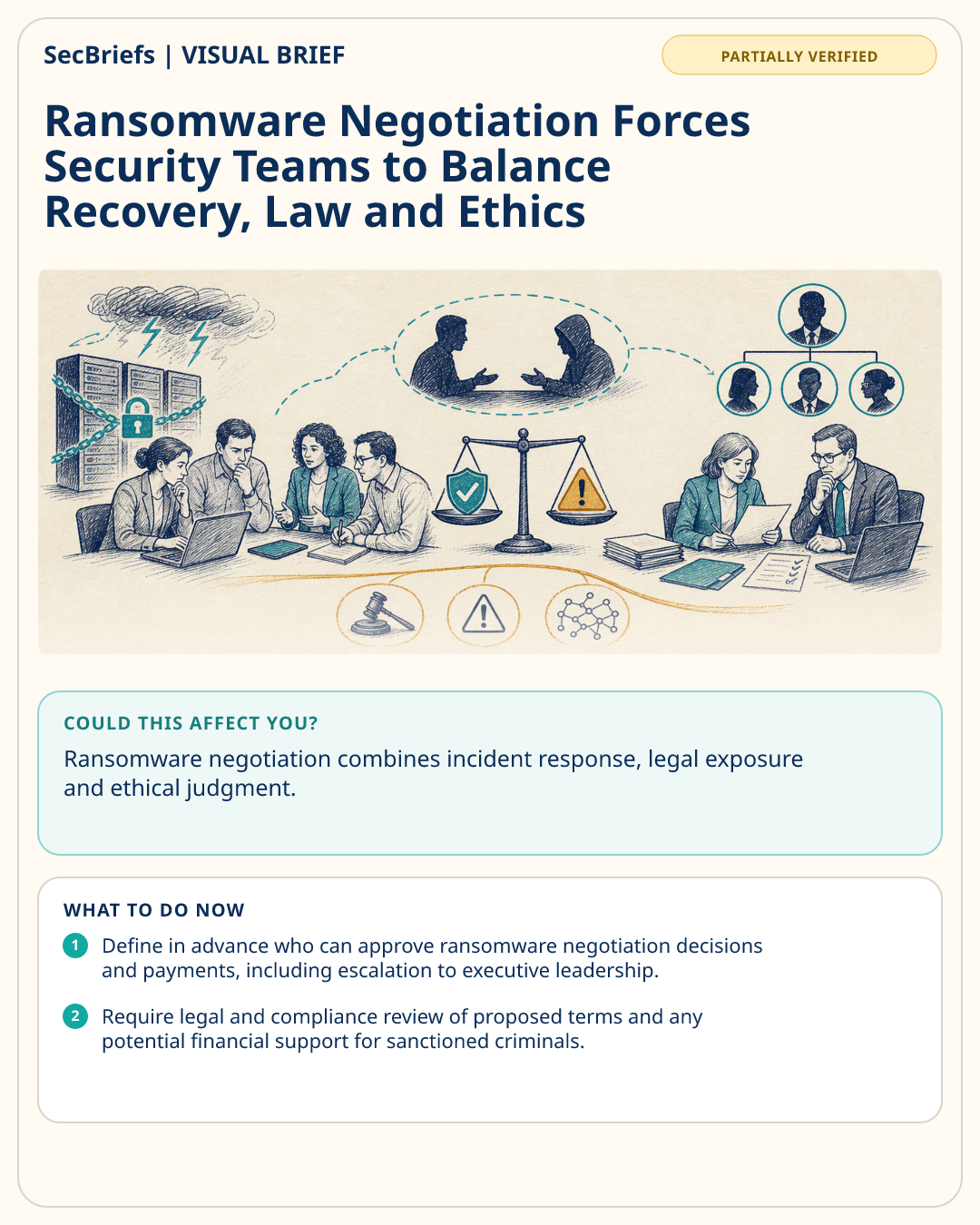
CyberScoop examines ransomware negotiation as a largely out-of-sight practice in cybersecurity. It describes the central tension: security professionals and incident response firms may help clients recover access to data and operations while avoiding conduct that could financially support sanctioned criminals or encourage financially motivated crime. Negotiators must balance client needs against legal constraints and personal ethical boundaries, often when no option feels good. The article says negotiations can go awry, underscoring the risks in backchannel dealings with cybercriminals. Its focus is not a single incident or named victim, but the difficult decisions involved in payment discussions and terms. For organizations facing ransomware, the account highlights why negotiation planning requires coordination among security, legal, compliance and leadership functions. It also frames the issue as both an operational challenge and a moral question: how to meet immediate client responsibilities without helping sustain the criminal model behind the extortion.
WHY IT MATTERS
Ransomware negotiation combines incident response, legal exposure and ethical judgment. The choices made during payment discussions can affect whether an organization avoids financially supporting sanctioned criminals while still addressing pressure on its data and operations. CyberScoop’s account highlights that these decisions should not be improvised or left to a single negotiator. Clear authority, legal review and documented boundaries can help organizations navigate a situation in which the available options may all carry serious concerns.
WHO SHOULD CARE
Security leaders, incident response firms, legal and compliance teams, executives responsible for crisis decisions, and organizations that need a plan for responding to ransomware demands should care about this issue.
WHAT TO DO NOW
- Define in advance who can approve ransomware negotiation decisions and payments, including escalation to executive leadership.
- Require legal and compliance review of proposed terms and any potential financial support for sanctioned criminals.
- Document ethical boundaries, decision criteria and negotiation records before a ransomware crisis occurs.
- Coordinate security, incident response, legal, compliance and leadership teams through a rehearsed ransomware decision process.