Reported Covenant Health breach affected more than 478,000 people
THE BRIEF
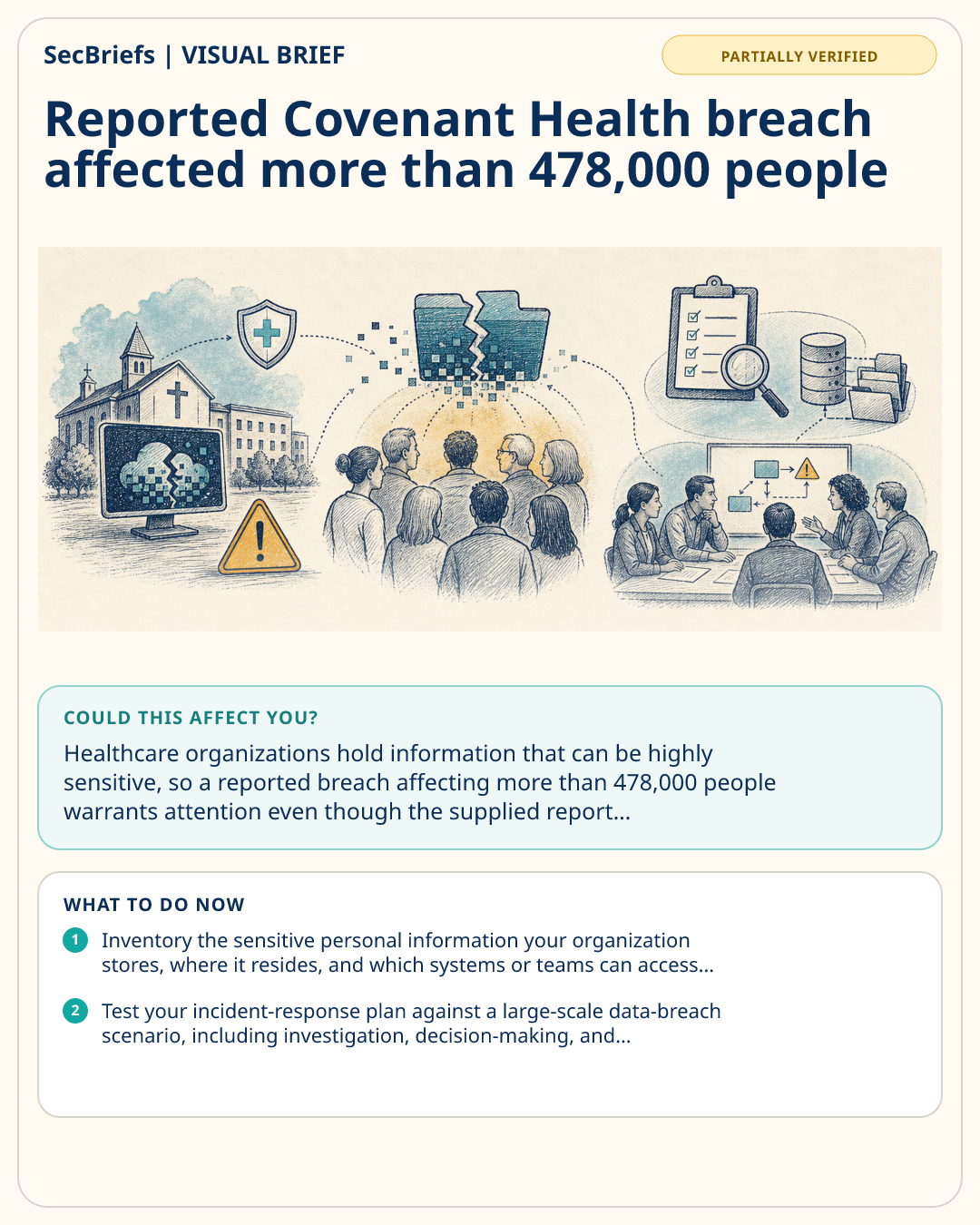
The Record from Recorded Future News reported on Jan. 2, 2026, that nearly 480,000 people were impacted by a data breach tied to a cyberattack against Covenant Health, a Catholic healthcare organization. The report said the incident occurred last year and exposed sensitive information belonging to more than 478,000 people. The supplied account does not identify the specific information involved, explain how attackers gained access, or describe whether the data was misused. It also does not provide further details about the organization’s response, notifications, or remediation. Accordingly, the known picture is limited: Covenant Health experienced a cyberattack, and the resulting breach affected a large number of individuals. Organizations handling healthcare information can use the report as a prompt to review their breach-response readiness and data-protection controls, while treating the reported scope and circumstances as facts attributed to the named source rather than as independently verified findings.
WHY IT MATTERS
Healthcare organizations hold information that can be highly sensitive, so a reported breach affecting more than 478,000 people warrants attention even though the supplied report provides limited incident detail. The scale makes disciplined preparation important: teams need to know what data they hold, how they will assess an incident, and how they will communicate if notification duties arise. The account is not enough to establish misuse, attacker methods, or broader impact, but it does highlight the importance of data minimization, access governance, and tested response processes.
WHO SHOULD CARE
Healthcare security and privacy leaders, legal and compliance teams, incident-response planners, and executives at organizations holding sensitive personal information should review their readiness. Individuals potentially connected to Covenant Health may also look for official communications, while relying on verified updates rather than assumptions about the exposed data.
WHAT TO DO NOW
- Inventory the sensitive personal information your organization stores, where it resides, and which systems or teams can access it.
- Test your incident-response plan against a large-scale data-breach scenario, including investigation, decision-making, and communications roles.
- Review access controls and retention practices to ensure sensitive information is limited to necessary users and kept only as long as needed.