Researchers warn of elevated Iran-linked cyber threat to the US and allies
THE BRIEF
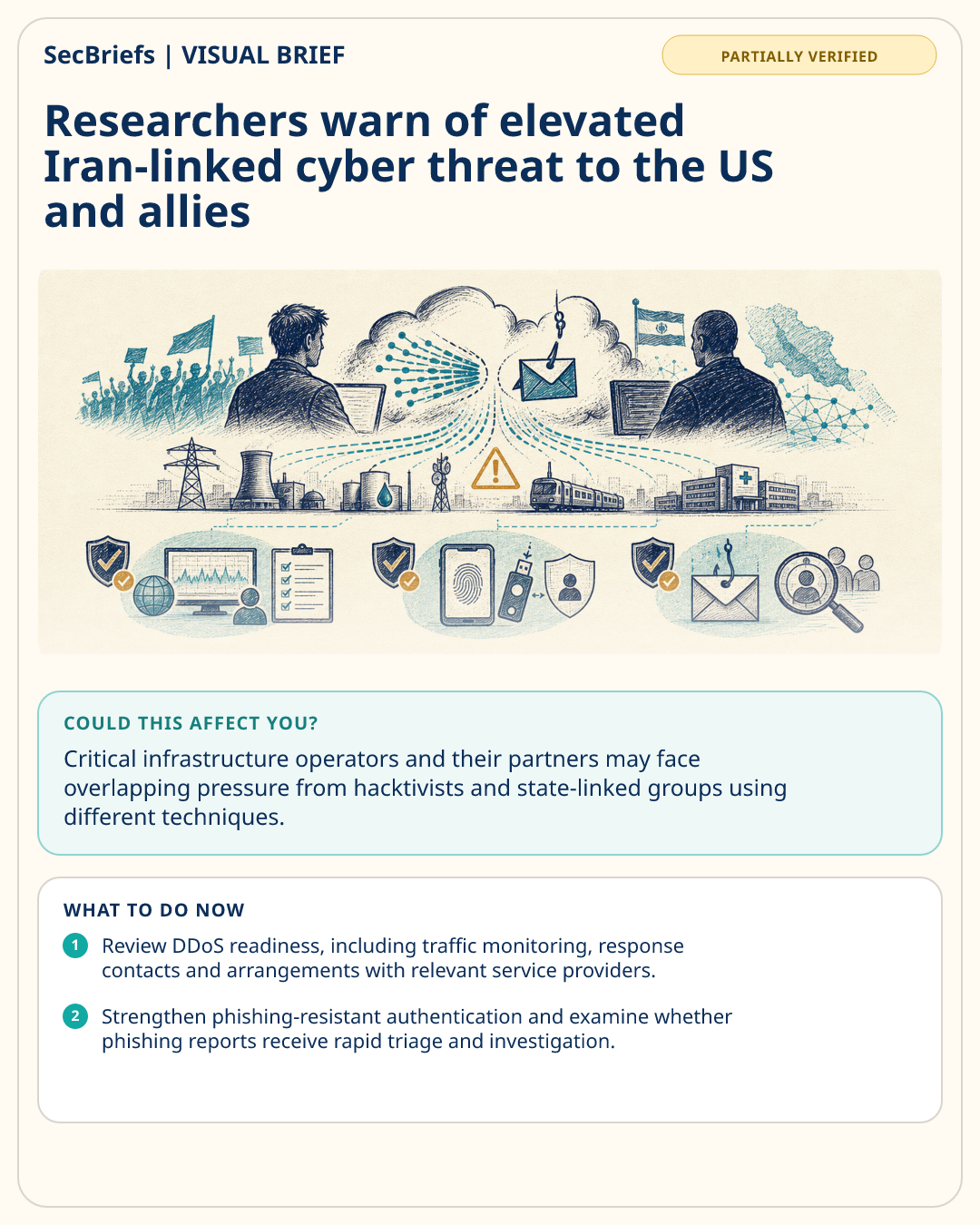
Cybersecurity researchers are warning that hacktivists and state-linked groups associated with Iran are raising the threat level for the United States and its allies. According to the supplied Cybersecurity Dive report, the groups are using distributed denial-of-service attacks, phishing and other tactics against critical infrastructure. The excerpt does not identify specific victims, disclose the scale of any disruption, or establish that every activity described is directed by the Iranian government. It also does not provide details about particular sectors, campaigns or successful compromises. The central concern is the combination of politically motivated hacktivist activity and state-linked operations, together with the use of methods that can target essential services or their supporting organizations. The report’s warning places emphasis on defensive awareness rather than a stated outcome. Organizations should therefore treat the account as a researcher assessment of risk, preserve uncertainty about attribution and impact, and review whether existing monitoring, phishing defenses and denial-of-service preparation are adequate for threats affecting critical infrastructure.
WHY IT MATTERS
Critical infrastructure operators and their partners may face overlapping pressure from hacktivists and state-linked groups using different techniques. DDoS attacks can affect availability, while phishing can support intrusion attempts or credential theft, but the supplied facts do not establish a particular compromise or consequence. The significance is the warning itself: defenders should account for multiple actors, methods and levels of attribution instead of relying on a single threat model. Because the source describes researchers’ concerns, organizations should distinguish reported activity from confirmed impact and avoid assuming that all Iran-linked claims represent the same operator.
WHO SHOULD CARE
Critical infrastructure owners and operators, government agencies, security teams, internet service providers and organizations supporting essential services should review this warning. Communications and executive teams should also understand the limits of the available attribution and impact information before characterizing an incident publicly.
WHAT TO DO NOW
- Review DDoS readiness, including traffic monitoring, response contacts and arrangements with relevant service providers.
- Strengthen phishing-resistant authentication and examine whether phishing reports receive rapid triage and investigation.
- Validate monitoring for suspicious access, credential use and availability changes across critical systems and their supporting networks.