Rituals discloses customer data breach affecting membership records
THE BRIEF
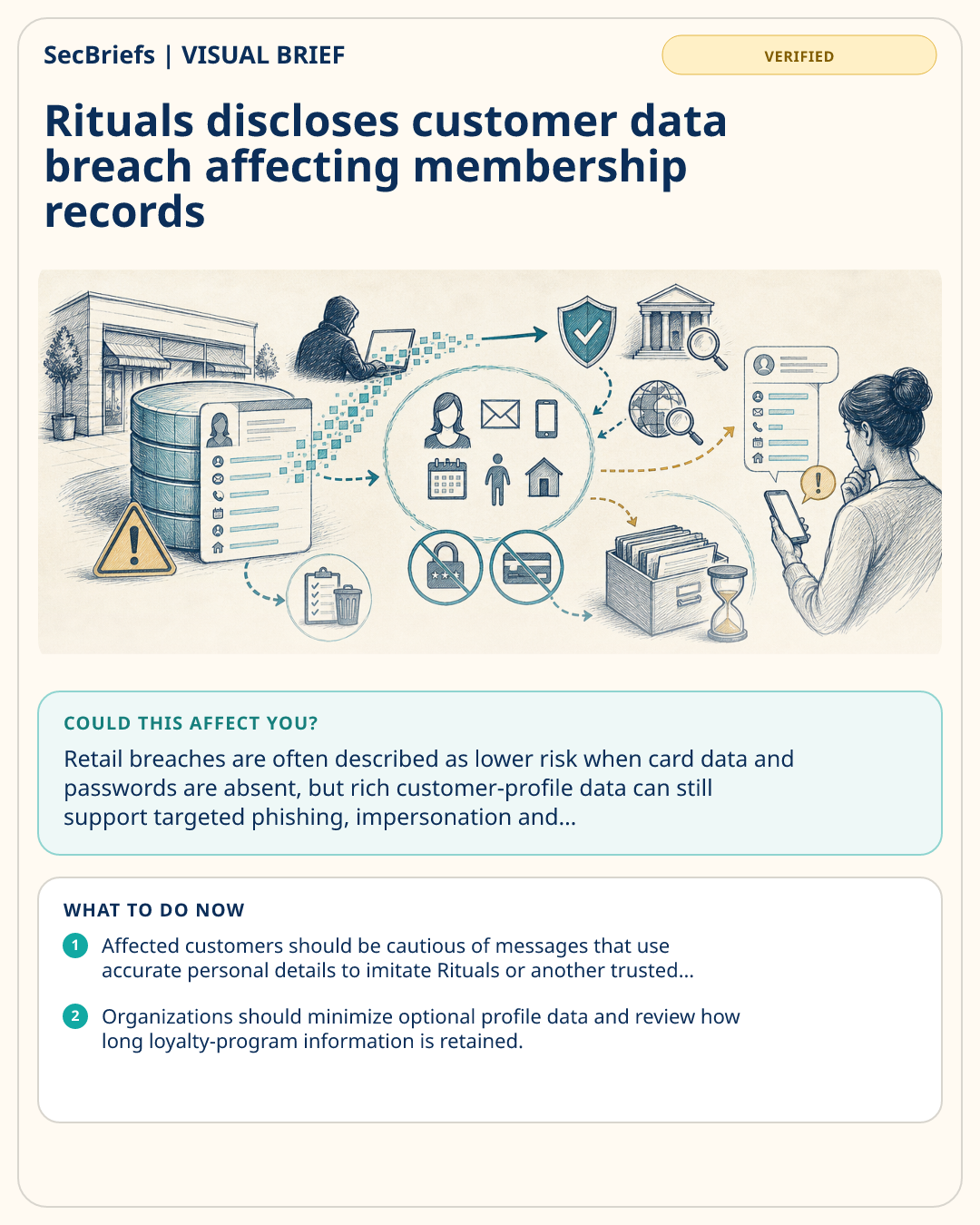
Rituals disclosed that attackers accessed customer information from its My Rituals membership database after the company was alerted to unauthorized downloads. The Dutch cosmetics company said the exposed information could include names, email addresses, phone numbers, dates of birth, gender and home addresses, depending on what individual members had provided. Rituals said passwords and payment information were not accessed. The company blocked the attackers’ access, notified relevant authorities and said it had not found evidence at the time of disclosure that the stolen information had been published online. The number of affected customers was not disclosed in the reporting. The incident is a useful reminder that loyalty and membership databases can create meaningful identity and phishing risk even when financial credentials are not part of the breach. Contact details, demographic information and addresses can be combined with other leaked data to make scams more convincing or to answer account-recovery questions elsewhere.
WHY IT MATTERS
Retail breaches are often described as lower risk when card data and passwords are absent, but rich customer-profile data can still support targeted phishing, impersonation and identity fraud. Membership databases also tend to retain information for long periods, so the exposure can remain useful to criminals well after the original incident. Customer communications should therefore focus on realistic follow-on scams rather than only payment-card monitoring. That makes data minimization and credible customer warnings part of the security response, not only a privacy exercise.
WHO SHOULD CARE
Rituals customers, retail privacy teams, loyalty-program operators and organizations that maintain large customer-profile databases should care because non-payment personal data can still support targeted fraud and impersonation.
WHAT TO DO NOW
- Affected customers should be cautious of messages that use accurate personal details to imitate Rituals or another trusted retailer.
- Organizations should minimize optional profile data and review how long loyalty-program information is retained.
- Monitor membership systems for unusual bulk downloads and abnormal administrative access.
- Keep breach communications precise about which fields were and were not confirmed exposed.