Russian-linked phishing targeted officials’ secure messaging accounts worldwide
THE BRIEF
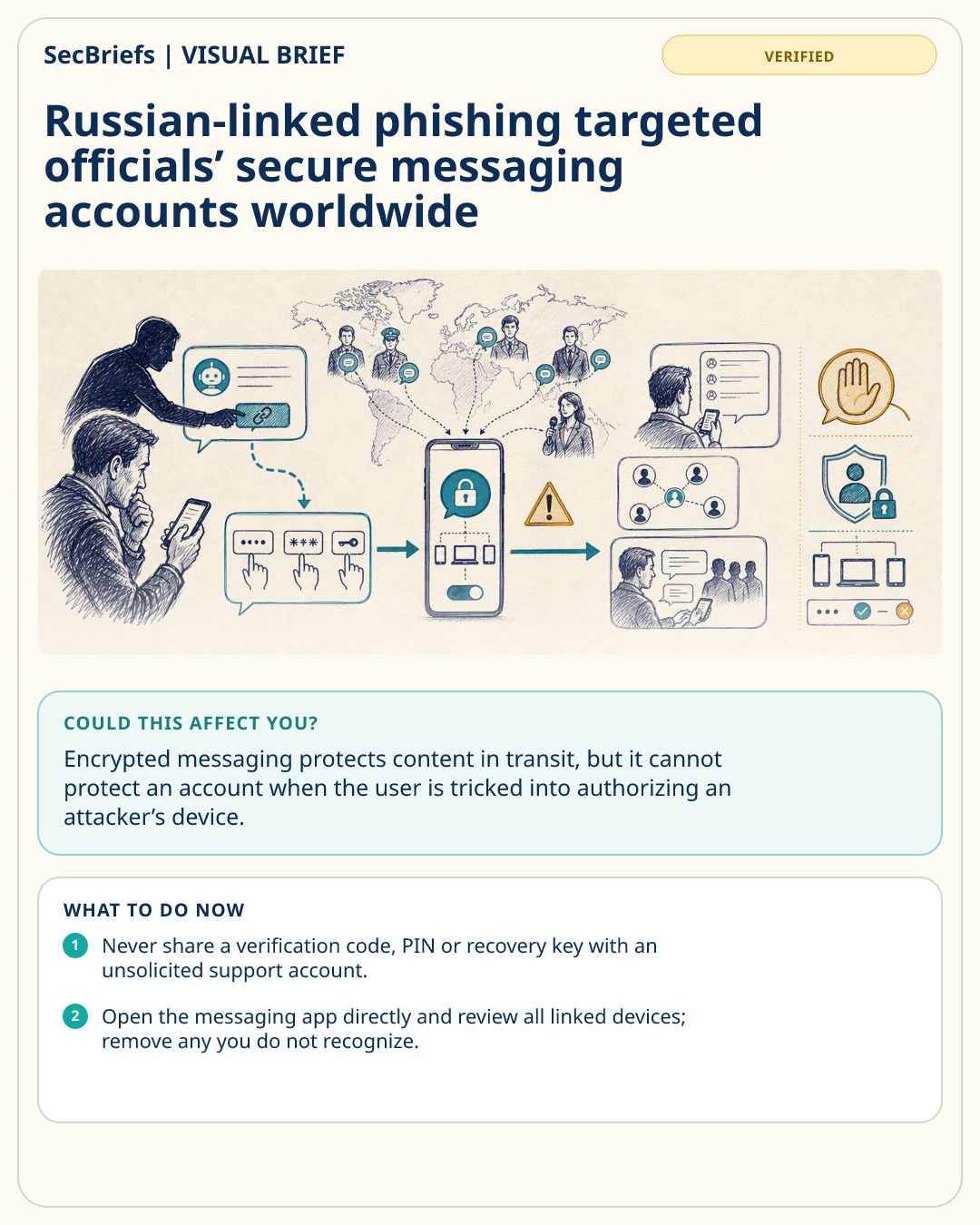
According to the March 20 public-service announcement, attackers impersonated automated support accounts and tailored messages to persuade targets to click a link, provide a verification code or disclose an account PIN. Those actions could let an attacker link another device or take over the account. This was social engineering rather than a demonstrated break of end-to-end encryption. The warning said the methods could apply across messaging services, although Signal was a prominent target. Once an account is accessed, an intruder may read available conversations, see contacts or impersonate the victim to reach others. The agencies advised users to treat unsolicited support messages as hostile and to review linked devices. The core lesson applies beyond high-profile officials. Any employee, manager or family member can be targeted through a believable message that creates urgency around account security. Verification codes and recovery secrets should be treated like passwords and never supplied to someone who initiates contact.
WHY IT MATTERS
Encrypted messaging protects content in transit, but it cannot protect an account when the user is tricked into authorizing an attacker’s device. That distinction is practical: organizations may otherwise respond by abandoning useful tools rather than strengthening account controls and user behavior. A compromised official or executive account also becomes a trusted launch point for further phishing. Teams should therefore combine secure applications with device-link reviews, recovery-code protection and procedures for verifying unusual messages through a separate channel. This makes routine account hygiene a core operational safeguard.
WHO SHOULD CARE
Government officials, military personnel, journalists and their support teams face the highest intelligence risk. Employees, executives and anyone using encrypted messaging for sensitive work should also care because the same support-impersonation method can target ordinary business or personal accounts.
WHAT TO DO NOW
- Never share a verification code, PIN or recovery key with an unsolicited support account.
- Open the messaging app directly and review all linked devices; remove any you do not recognize.
- Verify unusual requests from a known contact through a separate channel.
- Enable available registration locks or account PIN protections and store recovery secrets securely.
- Report suspected compromise to the organization’s security team before deleting evidence.