Russian National Pleads Guilty in Ransomware Conspiracy Case
THE BRIEF
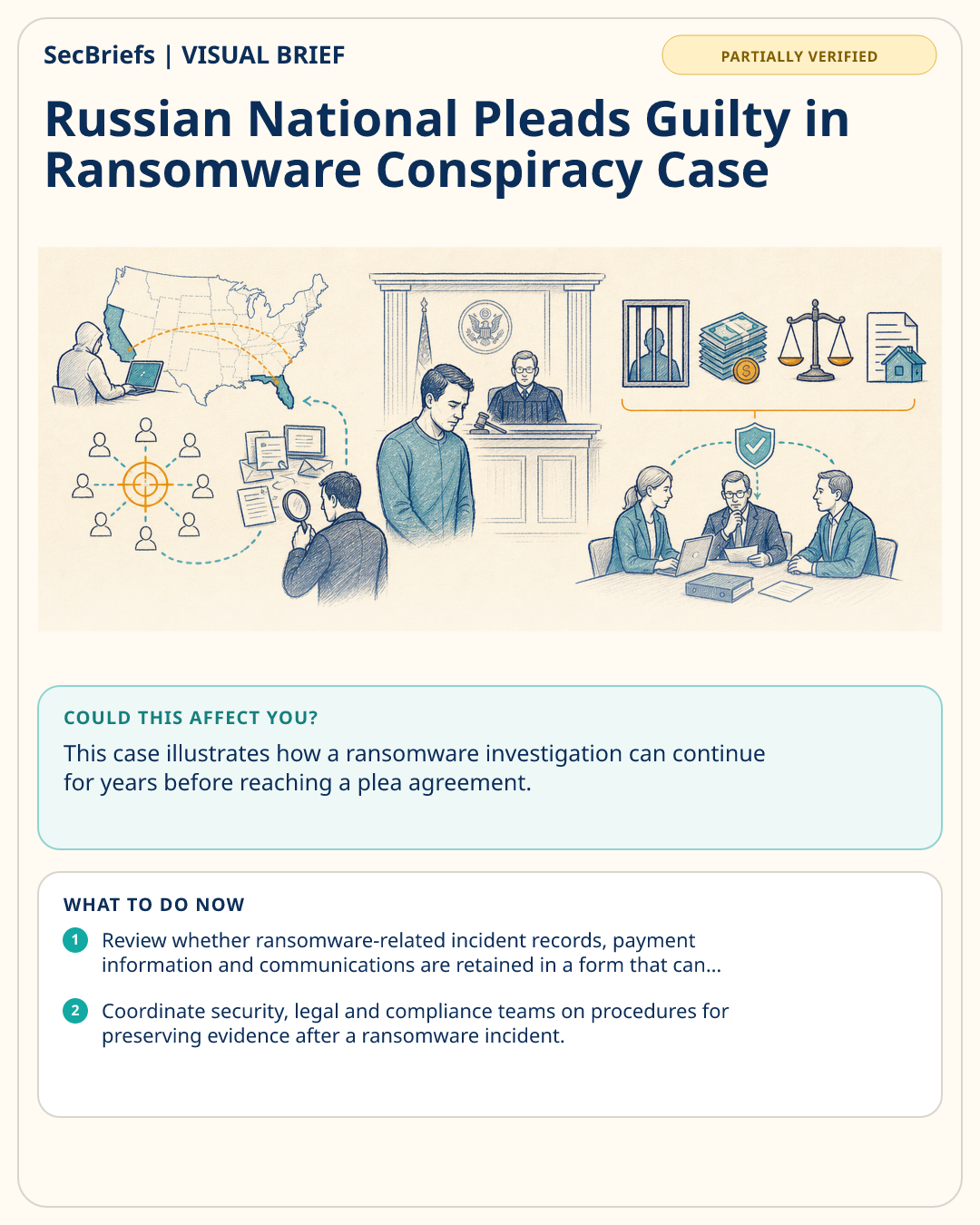
CyberScoop reports that Ianis Aleksandrovich Antropenko, a Russian national, pleaded guilty earlier this month in the U.S. District Court for the Northern District of Texas to conspiracy to commit money laundering and conspiracy to commit computer fraud and abuse. Prosecutors say the ransomware conspiracy targeted at least 50 victims during a four-year period ending in August 2022. The report says Antropenko began participating in ransomware attacks before moving to the United States and conducted many of the alleged crimes while living in Florida and California. He was arrested in 2024 and has been out on bond, according to the report. Under the plea agreement, he faces up to 25 years in prison and fines of up to $750,000. He has also been ordered to pay restitution to victims and forfeit property. The agreement followed a years-long federal investigation. The report describes the matter as an unusual case involving a Russian ransomware operator.
WHY IT MATTERS
This case illustrates how a ransomware investigation can continue for years before reaching a plea agreement. The reported guilty plea links the allegations to two federal conspiracy charges: money laundering and computer fraud and abuse. The reported potential prison term, fine, restitution order and property forfeiture also show the range of legal consequences described in the case. Because the report says at least 50 victims were targeted, security and legal teams can use the proceeding as a reminder to preserve records and understand how incident evidence may support later investigations.
WHO SHOULD CARE
Security leaders, incident-response teams, legal counsel, ransomware negotiators and organizations responsible for preserving incident records should care. The case is also relevant to anyone tracking ransomware investigations, plea agreements and federal enforcement.
WHAT TO DO NOW
- Review whether ransomware-related incident records, payment information and communications are retained in a form that can support a later investigation.
- Coordinate security, legal and compliance teams on procedures for preserving evidence after a ransomware incident.
- Track public court updates on the plea, sentencing, restitution and forfeiture described in the report.
- Use the reported four-year period and at-least-50-victim figure as prompts to test incident timelines and escalation records.