Trojanized Notepad++ updates reportedly delivered malware to selected users
THE BRIEF
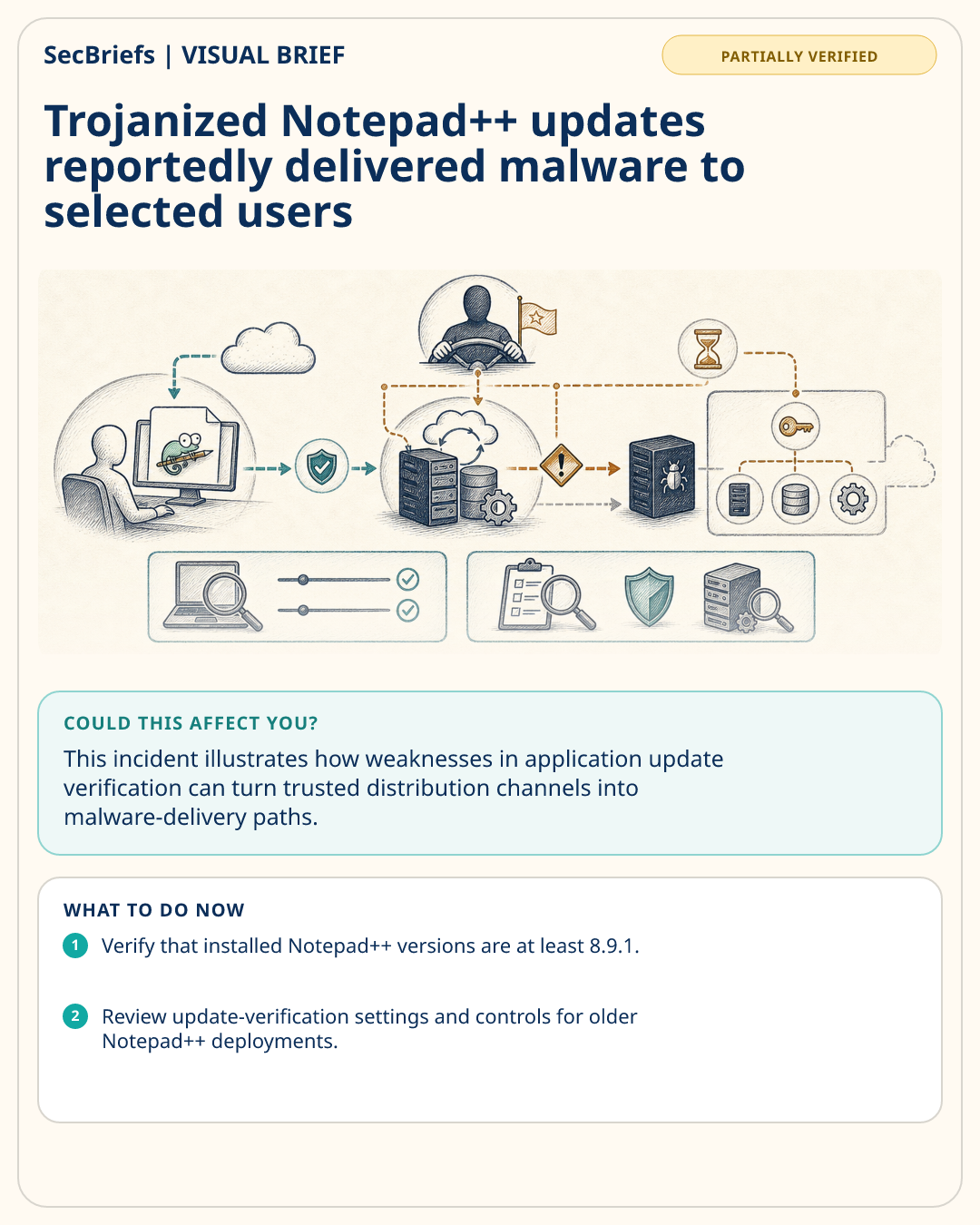
Schneier on Security reports that hackers associated with the Chinese government used a Trojanized version of Notepad++ to deliver malware to selected users. According to the account, an unnamed provider hosting the application’s update infrastructure remained compromised until September 2, after officials consulted incident responders. The attackers reportedly retained credentials to internal services until December 2, allowing them to keep redirecting selected update traffic to malicious servers. The reported objective was to exploit insufficient update-verification controls in older Notepad++ versions. Event logs indicate the attackers attempted to reuse one weakness after it had been fixed, but that attempt failed. The report does not establish how many users received malicious updates or what data or systems were affected. Notepad++ users should check that they are running at least version 8.9.1, while organizations should treat software-update infrastructure and retained provider credentials as security dependencies requiring review.
WHY IT MATTERS
This incident illustrates how weaknesses in application update verification can turn trusted distribution channels into malware-delivery paths. The reported persistence of compromise and retained internal-service credentials also shows why recovery should include credential removal and validation of update routing, not only remediation of the original access. The account says a later re-exploitation attempt failed, but it does not establish the broader reach or impact. Version checks and provider-focused review can help reduce exposure to the specific conditions described.
WHO SHOULD CARE
Notepad++ users, software asset managers, endpoint teams, and security leaders responsible for third-party software and update infrastructure should care. Organizations relying on externally hosted update services should also review provider access and verification controls.
WHAT TO DO NOW
- Verify that installed Notepad++ versions are at least 8.9.1.
- Review update-verification settings and controls for older Notepad++ deployments.
- Ask relevant providers to confirm update infrastructure status and remove unnecessary internal-service credentials.
- Check logs for unexpected Notepad++ update redirects or connections to malicious servers.
VERIFICATION NOTE
Reported by Schneier on Security; this archive brief does not add independent confirmation beyond the cited source.