UK authorities warn of pro-Russia targeting of critical infrastructure and local government
THE BRIEF
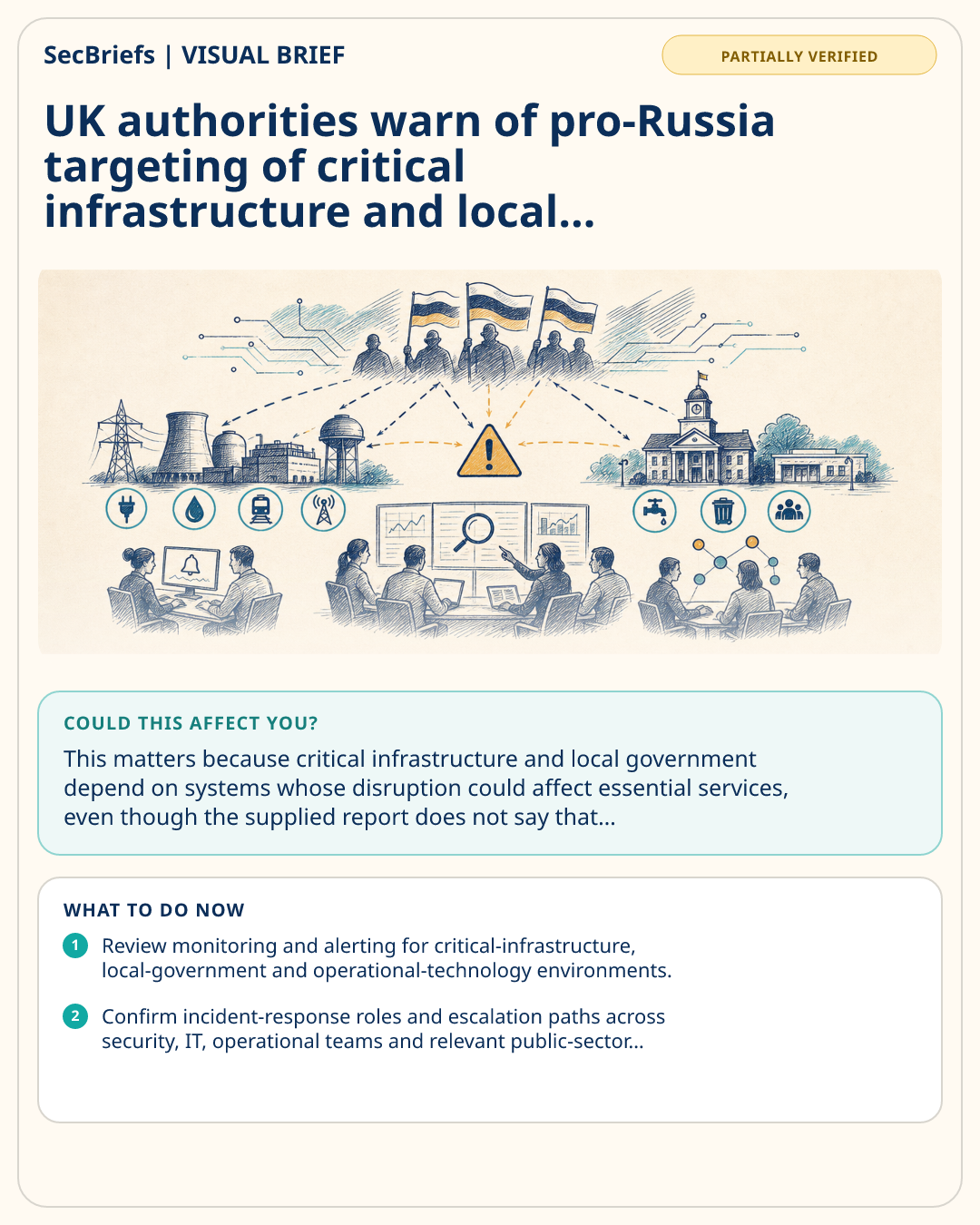
UK authorities have warned that groups described as pro-Russia are targeting critical infrastructure and local government, according to Cybersecurity Dive’s report on the alert. The warning arrives just over a month after a joint advisory from the U.S. Cybersecurity and Infrastructure Security Agency, the FBI and Western allies cited hacktivist activity against operational-technology providers. The supplied report does not identify specific organizations, incidents, techniques, affected systems or confirmed impacts. It also does not establish whether the activity described in the earlier advisory is connected to every group covered by the newer warning. Organizations responsible for critical infrastructure and local-government services should therefore treat the alert as a caution to review preparedness and monitoring, while avoiding assumptions about scope or attribution beyond the authorities’ characterization. The warning highlights continued concern about politically aligned cyber activity affecting public services and operational environments.
WHY IT MATTERS
This matters because critical infrastructure and local government depend on systems whose disruption could affect essential services, even though the supplied report does not say that disruption occurred here. The warning also places the issue in a broader pattern of concern: a recent joint advisory from CISA, the FBI and Western allies had already cited hacktivist activity against OT providers. Security leaders should use the alert to test whether responsibilities, monitoring and response arrangements are clear, without treating the report as evidence of a confirmed compromise or a defined campaign.
WHO SHOULD CARE
Operators of critical infrastructure, local-government technology teams, security leaders, incident-response planners and organizations supporting operational-technology providers should review the warning. Public-sector partners and executives responsible for resilience should also understand its limits.
WHAT TO DO NOW
- Review monitoring and alerting for critical-infrastructure, local-government and operational-technology environments.
- Confirm incident-response roles and escalation paths across security, IT, operational teams and relevant public-sector partners.
- Compare current preparedness with the risks described in the warning and earlier advisory, identifying gaps without assuming compromise.
- Validate communications plans for potential incidents involving critical-infrastructure or local-government systems.