Cybercrime groups are adopting corporate-style operations
THE BRIEF
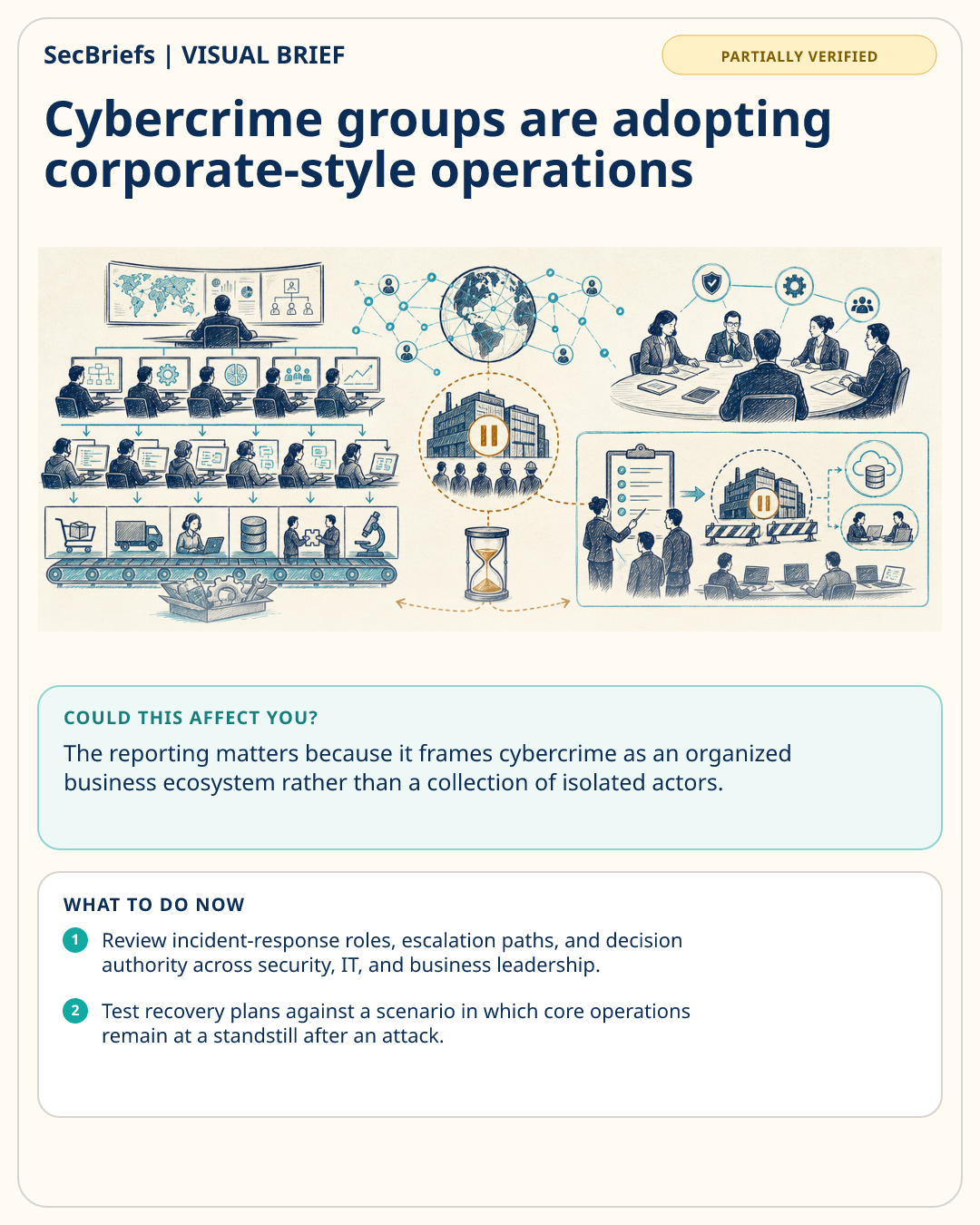
CSO Online reports that cybercrime has developed from loosely connected forum activity into a globally networked underground economy. The article says larger groups divide labor, use distribution channels, provide support, share revenue with partners, and invest in research and development. It compares these operations with international corporations, describing departments, processes, management levels, key performance indicators, software development, customer databases, and success-rate evaluations. The report’s central warning is operational: the question is not only whether a company will be targeted, but how long it could remain at a standstill afterward and whether it can recover. The supplied excerpt does not identify a particular incident, victim, group, or measured impact. Instead, it presents cybercrime as an organized industry whose efficiency, speed, and scalability may exceed those of many companies. For defenders, the framing emphasizes preparedness, continuity, and recovery rather than treating attacks as isolated events.
WHY IT MATTERS
The reporting matters because it frames cybercrime as an organized business ecosystem rather than a collection of isolated actors. That comparison highlights the importance of matching adversaries’ coordination with clear internal processes for preparedness, response, and recovery. The excerpt does not document a specific attack or outcome, so it cannot establish how any particular organization was affected. It does, however, present operational disruption and recovery time as central questions for companies assessing their resilience.
WHO SHOULD CARE
Security leaders, IT operations teams, business continuity planners, and executives responsible for organizational resilience should care. The article’s emphasis on coordination and recovery is relevant to anyone preparing for a disruptive cyber incident.
WHAT TO DO NOW
- Review incident-response roles, escalation paths, and decision authority across security, IT, and business leadership.
- Test recovery plans against a scenario in which core operations remain at a standstill after an attack.
- Document dependencies on internal teams, external providers, and distribution channels that could affect response or recovery.
- Track recovery objectives and exercise outcomes so leadership can evaluate preparedness over time.