Polish authorities arrest alleged Phobos ransomware affiliate
THE BRIEF
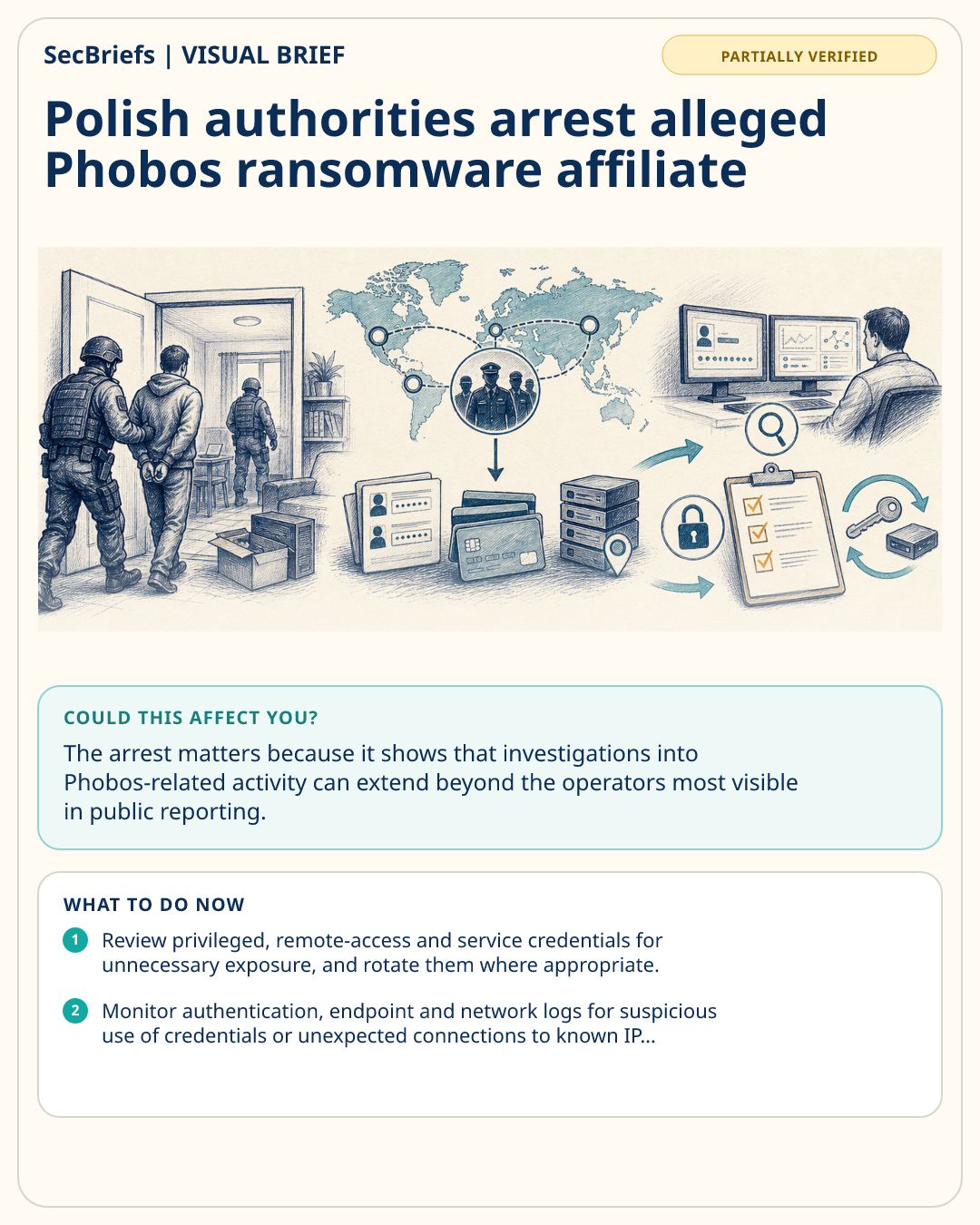
CyberScoop reports that Polish authorities arrested a 47-year-old man accused of participating in ransomware attacks as an affiliate for the Phobos ransomware group. The country’s Central Bureau for Combating Cybercrime said the arrest took place during a raid on the suspect’s apartment in Małopolskie province. Officials did not identify him and said he could face up to five years in prison for the alleged crimes. Authorities said they identified the suspect through “Phobos Aetor,” a Europol-led operation involving agencies across Europe, Asia and North America that took place in February 2025. According to Polish officials, the suspect allegedly possessed credentials, credit card numbers and IP addresses for servers. The arrest follows other coordinated law enforcement actions targeting people involved with Phobos attacks. CyberScoop also notes that 8base carried out attacks associated with the same ransomware ecosystem. The report describes an allegation and an arrest; it does not establish a conviction or provide further details about specific victims or incidents.
WHY IT MATTERS
The arrest matters because it shows that investigations into Phobos-related activity can extend beyond the operators most visible in public reporting. Polish authorities say the suspect was identified through a multinational operation, illustrating how cross-border cooperation may support arrests in ransomware cases. The reported possession of credentials, payment-card numbers and server IP addresses also highlights the kinds of information authorities may examine when pursuing alleged affiliates. However, the available account describes an allegation, not a conviction, and does not specify affected organizations, attack dates or operational methods. Security teams should therefore treat this as a law-enforcement development and use it to reinforce preparedness, not as evidence of a particular incident.
WHO SHOULD CARE
Security leaders, identity teams, incident responders and fraud specialists should monitor developments involving Phobos and 8base, while legal and compliance teams should distinguish the reported arrest from a proven conviction or confirmed incident.
WHAT TO DO NOW
- Review privileged, remote-access and service credentials for unnecessary exposure, and rotate them where appropriate.
- Monitor authentication, endpoint and network logs for suspicious use of credentials or unexpected connections to known IP addresses.
- Brief legal, compliance and security teams on the reported arrest while preserving relevant investigative records.