Windows bug shows false Defender antivirus-off alerts
THE BRIEF
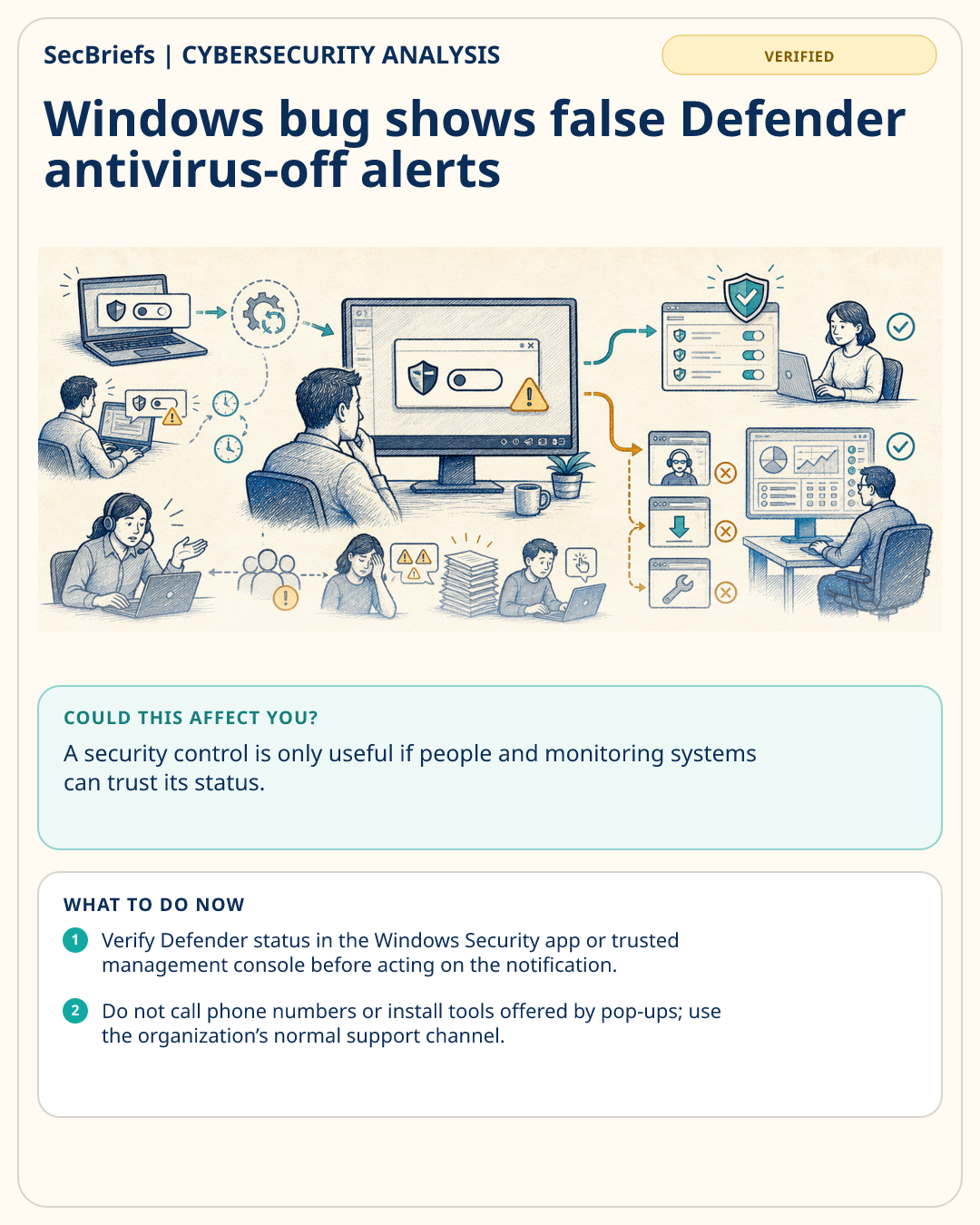
Some Windows users are receiving notifications that Microsoft Defender Antivirus is turned off even though the protection service is still running and settings show it enabled. CSO reported the problem on 31 August after Microsoft acknowledged it in a Windows release-health update. The false alerts can appear at startup and return intermittently, including when notification settings are disabled. Microsoft said the issue followed recent Defender updates and was working on a resolution. This is not a reason to dismiss every security warning automatically: users and help desks should verify the actual protection state inside the Windows Security application or through trusted enterprise management telemetry before treating the notification as erroneous. The bug creates a practical social-engineering opportunity because criminals can imitate the message and direct people to fake support pages, phone numbers or software downloads. Organizations should give staff a simple, approved verification path and avoid ad hoc workarounds that weaken antivirus, compliance policy or endpoint reporting while waiting for the vendor fix.
WHY IT MATTERS
A security control is only useful if people and monitoring systems can trust its status. False alarms create alert fatigue, consume support capacity and may encourage users to click untrusted “fix” links. For managed fleets, the safest response is to distinguish interface noise from actual service state using central telemetry, rather than suppressing protection checks. The incident is also a reminder that operational defects in security software can become fraud enablers even when they do not disable the underlying defensive capability.
WHO SHOULD CARE
Windows users, enterprise help desks, endpoint engineering teams, managed service providers and fraud-awareness leaders should care, particularly where Defender status feeds compliance or access decisions.
WHAT TO DO NOW
- Verify Defender status in the Windows Security app or trusted management console before acting on the notification.
- Do not call phone numbers or install tools offered by pop-ups; use the organization’s normal support channel.
- Track affected builds and Defender versions, preserve endpoint compliance checks and deploy Microsoft’s fix when released.
VERIFICATION NOTE
Verified through CSO and BleepingComputer reporting that cites Microsoft’s Windows release-health acknowledgement. Both sources say the notification can be false while Defender remains active. The practical guidance preserves verification because a genuine disabled-antivirus condition is still possible.