Watershed 250 tests cyber defenses for Texas water systems
THE BRIEF
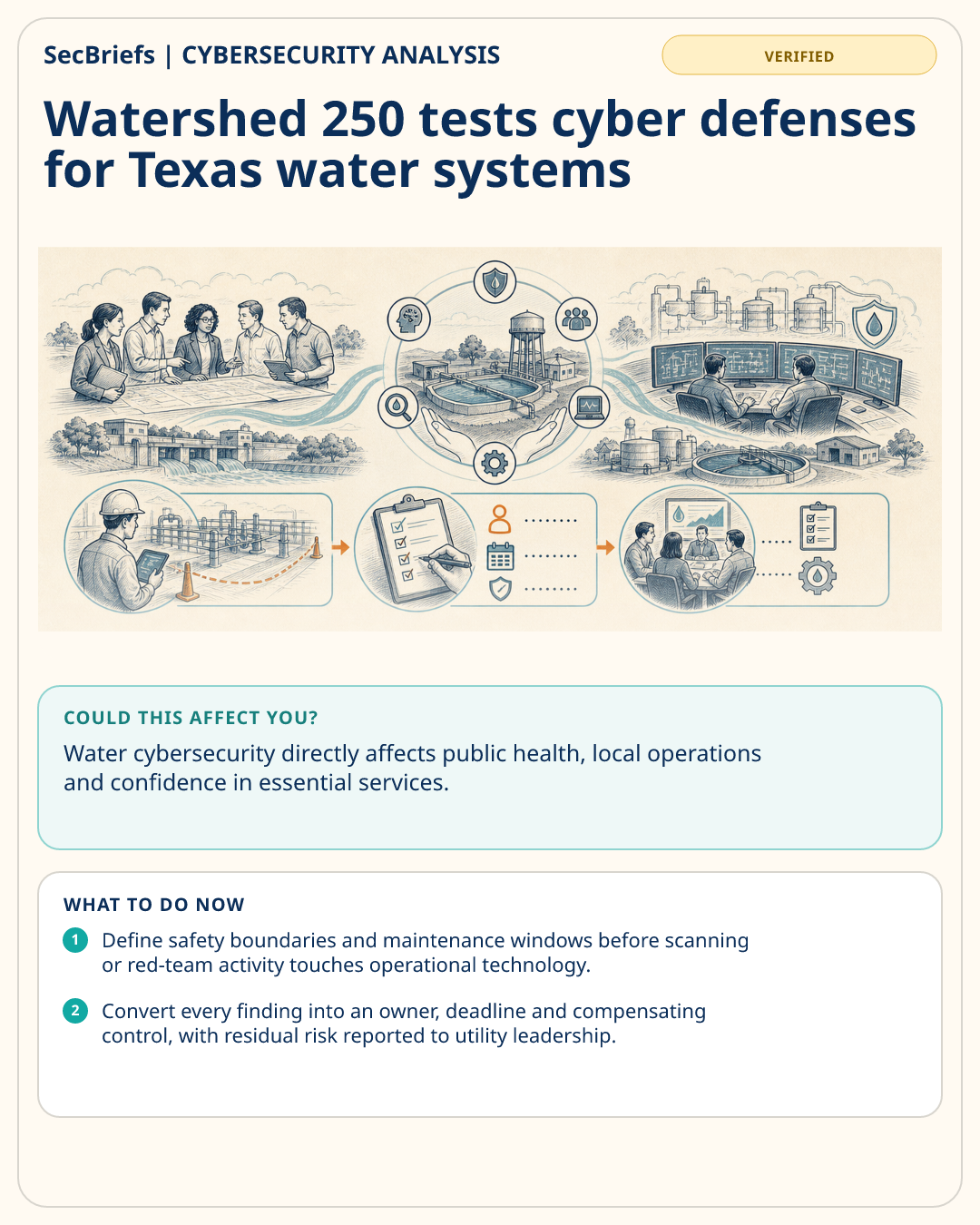
U.S. federal and Texas officials launched Project Watershed 250, a six-month pilot that pairs water and wastewater utilities with private-sector cybersecurity and artificial-intelligence expertise. CyberScoop reported the launch on 31 August, describing volunteer services that include red-team testing, system hardening and tools intended to help utilities find and fix weaknesses. The program is coordinated with the Office of the National Cyber Director and Texas Cyber Command, and officials say successful practices could be scaled beyond the initial participants. That promise should be measured by outcomes rather than participation counts: utilities need fixes that remain affordable, maintainable and safe for operational technology after the pilot ends. Red-team activity in water environments also requires careful change control because scanning or testing techniques that are routine in office IT can disrupt fragile industrial systems. The initiative addresses a familiar resilience gap—small utilities often face consequential cyber risk without dedicated security staff—but its long-term value will depend on sustained asset visibility, segmentation, recovery testing and ownership after donated support expires.
WHY IT MATTERS
Water cybersecurity directly affects public health, local operations and confidence in essential services. A pilot that brings expertise to under-resourced utilities can reduce exposure, but short-term assessments do not automatically create durable resilience. The strongest result would be a repeatable operating model: known assets, prioritized remediation, safe incident playbooks, tested manual operations and budgeted maintenance. Project Watershed 250 is therefore a test not only of technology, but of whether federal, state, local and private partners can turn temporary attention into lasting control ownership.
WHO SHOULD CARE
Water and wastewater operators, municipal leaders, critical-infrastructure regulators, operational-technology vendors, emergency managers and insurers should care, especially those supporting small or rural utilities with limited security capacity.
WHAT TO DO NOW
- Define safety boundaries and maintenance windows before scanning or red-team activity touches operational technology.
- Convert every finding into an owner, deadline and compensating control, with residual risk reported to utility leadership.
- Test manual operations, communications and recovery procedures so service can continue if digital controls become unavailable.