OpenAI Announced $1B in Defensive Tools for Water Utilities
BRIEF
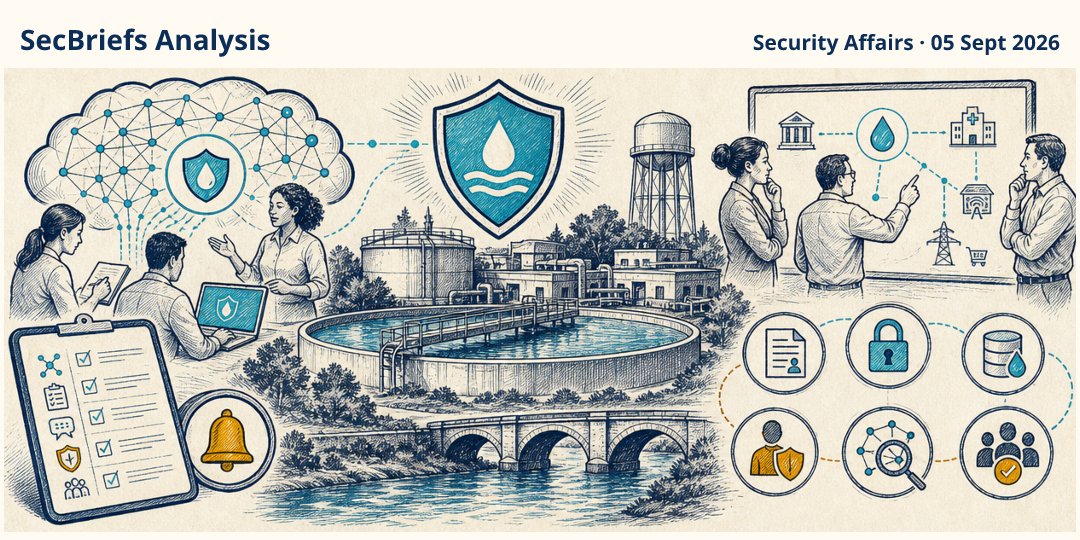
OpenAI has announced a program called Daybreak for Frontline Defenders, with a stated commitment of $1 billion in subsidized access to cyber models, training, and technical support. The supplied reporting says the effort is intended to help organizations protecting essential services in the United States and internationally, including under-resourced critical-infrastructure defenders. The announcement is defensive in purpose and may provide participating organizations with additional capability for security operations, staff development, and technical assistance. It does not establish that a particular water utility has enrolled, that any tool has been deployed, or that the program has reduced risk. It also does not describe eligibility rules, delivery dates, governance arrangements, data-use limitations, integration requirements, or performance measures. Those gaps matter because critical-infrastructure operators may handle sensitive operational information and may have limited capacity to evaluate new technology safely. Banks and other organizations that rely on essential services should therefore treat the initiative as a possible resilience resource, not as a substitute for supplier assurance or continuity planning. No attacker claim appears in the supplied material, and no specific incident or vulnerability is reported.
WHY IT MATTERS
Water and other essential-service operators can be important dependencies for banks, even when the bank does not directly manage the underlying systems. Better defensive capacity at those providers could support broader operational resilience, but the benefit remains prospective until participation, deployment, safeguards, and outcomes are known. Financial institutions should not assume that a public funding pledge changes the risk profile of a named utility or supplier. Instead, they can use the announcement as a prompt to revisit dependency maps, outage scenarios, communications plans, and third-party questions about cyber support. The program also raises practical governance questions: who controls operational data, how access is limited, and how AI-generated recommendations are reviewed before action.