Cisco Fixed Critical RCE in Nexus 9000 Series Switches

BRIEF
Cisco has released fixes for CVE-2026-20212, a critical vulnerability reported in 10 Silicon One-based Nexus 9000 switches. The supplied details assign the flaw a CVSS score of 9.8 and describe a path for an unauthenticated remote attacker to execute code with root privileges. That combination makes the issue especially important for teams responsible for data-center switching, network segmentation, and management-plane security. The available information does not establish that the vulnerability has been exploited in the wild, nor does it identify every affected software release or the exact exposure conditions. Organizations should therefore confirm the affected hardware and software inventory against Cisco’s current advisory, then apply the appropriate fixed release or mitigation. Internet reachability is not the only concern: a compromised switch may provide a powerful position from which to alter configurations, observe traffic flows, disrupt connectivity, or affect trust between network segments. Emergency change review should include backup validation, out-of-band access, and a plan for checking configuration integrity after remediation. Monitoring should focus on unexpected administrative activity and changes to routing, access controls, and device software.
WHY IT MATTERS
Core switches are part of the control plane for segmentation, connectivity, and access to services. A remote, unauthenticated path to root-level execution can turn a network device into a high-value foothold or disruption point, even where application servers are well protected. The supplied facts do not prove exploitation, but the severity and privilege level justify rapid exposure assessment. Banks and other critical operators should treat affected devices as infrastructure emergencies, verify whether management or relevant services are reachable from untrusted networks, and preserve evidence before and after patching where feasible.
WHO SHOULD CARE
Network engineering, infrastructure security, data-center operations, vulnerability management, and incident response teams should coordinate. Financial institutions should also involve resilience owners because switching failures or unauthorized configuration changes can affect customer-facing and internal services.
WHAT TO DO
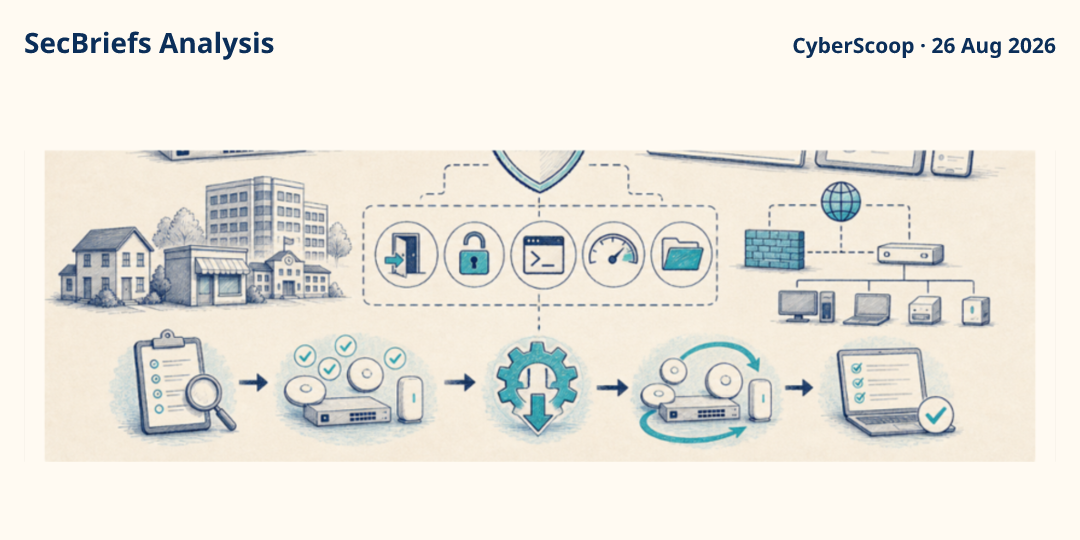
- Inventory Nexus 9000 hardware and software versions, identify Silicon One-based models, and compare them with Cisco’s affected and fixed versions.
- Check whether management interfaces or vulnerable services are reachable from the internet, user networks, or other untrusted segments; restrict access where possible.
- Apply the vendor fix through an approved emergency change, with current configuration backups and verified out-of-band or console access.
- Review device logs and configuration history for unexpected logins, privilege use, software changes, routing changes, or access-control modifications.
- After remediation, validate segmentation, routing, management access, and monitoring coverage; preserve relevant logs if suspicious activity is found.
TECHNICAL DETAILS
The supplied source supports Cisco’s patch and the reported CVE details. The vulnerability affects enterprise networking infrastructure and permits unauthenticated remote code execution.