SonicWall Urges Immediate Patching of Chained Vulnerabilities
BRIEF
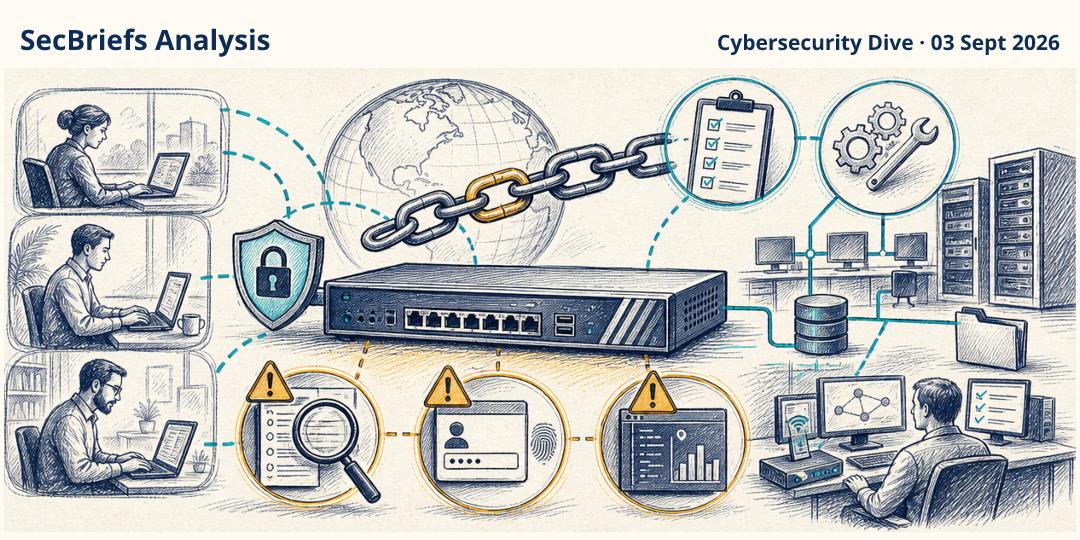
SonicWall is urging customers to patch chained vulnerabilities in SMA1000 series appliances, with the warning coming weeks after a wave of ransomware attacks and new flaws that are reportedly being exploited. The supplied information does not provide the vulnerability identifiers, affected releases, exploitation mechanics, or indicators of compromise, so defenders should consult SonicWall’s current technical guidance rather than infer those details. The key operational point is the combination of remote-access infrastructure, chaining, and reported exploitation. SMA1000 appliances can sit on a path used by employees, administrators, partners, or contractors to reach internal systems; weaknesses in that path can increase the consequences of a compromise. Organizations should identify every SMA1000 deployment, determine whether it is internet-facing, confirm its software state, and apply the vendor’s prescribed update or mitigation. Patching alone should not close the response. Teams should review authentication and administrative logs, inspect for unexpected configuration changes, and verify that access policies still reflect least privilege. Where exploitation is suspected, preserve relevant evidence and involve incident response before making changes that could erase useful data. Recovery planning should include tested access through an alternate or out-of-band route because remote-access appliance maintenance can interrupt administrative connectivity.
WHY IT MATTERS
Remote-access appliances are strategically important because they mediate entry to internal environments. Chained weaknesses can allow an attacker to combine conditions that are less serious in isolation, while reported exploitation raises the urgency even though the supplied facts lack technical detail. Affected organizations should assume that exposure assessment, patching, credential review, and log analysis belong in one response workflow. The ransomware context reinforces the need to examine downstream access, not merely confirm that an appliance accepted an update.
WHO SHOULD CARE
Remote-access owners, network security, infrastructure operations, identity teams, vulnerability managers, and incident responders should act together. Organizations using SMA1000 appliances for workforce or partner access should treat this as a priority change and investigation item.
WHAT TO DO
- Locate all SMA1000 appliances, record versions and exposure, and compare them with SonicWall’s current affected and fixed-version guidance.
- Apply the vendor-recommended patch or mitigation through an emergency change process, preserving an alternate administrative path.
- Review appliance authentication, administrative, and configuration logs for unusual access, changes, or activity preceding remediation.
- Reset or revalidate credentials and access tokens when the vendor’s guidance or investigation indicates possible exposure; avoid assuming patching removes persistence.
- Check internal systems reachable through the appliance and increase monitoring for suspicious remote sessions or follow-on activity.
TECHNICAL DETAILS
The supplied source reports SonicWall’s urgent patching guidance following exploitation affecting SMA1000 appliances. The issue has material consequences for organizations using exposed remote-access infrastructure.